
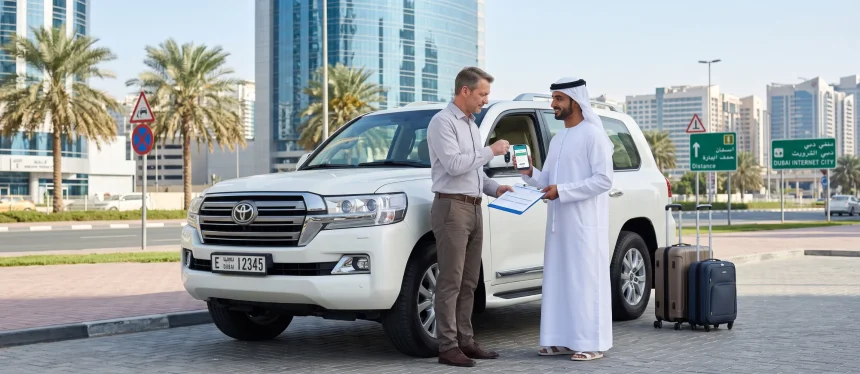
What if your flight is booked, your visa cancellation is already in motion, and your car is still sitting in the parking lot with no buyer in sight? Thousands of expats face this situation every year in the UAE.
Between packing, closing bank accounts, and saying goodbyes, searches for ” sell car before leaving UAE ” spike every relocation season.
The good news is that with the right order of steps, you can turn a stressful last-minute scramble into a smooth, fair-priced sale, even on a tight deadline.
Why Timing Is Everything When You’re Relocating?
Selling a car under pressure changes how negotiations will go. The seller will find out that buyers know this and will try to take advantage by offering the lowest possible price. Many people who are in a hurry to sell their car in Dubai become disappointed because buyers use the departure date to drive the price down.
This is why expatriates need a strategy when selling cars in Dubai, rather than rushing through the process. It is recommended that one should begin preparing four to eight weeks before departure in order to make sure the car gets sold without any problems.
How Much Time Do You Actually Need?
Below is a practical breakdown of how long each step would take based on the present process in the UAE:
| Task | Typical Time Needed | Notes |
| Bank loan clearance (if financed) | 2–5 working days | Most UAE banks take between two and five working days to issue the No Objection Certificate once the outstanding balance is cleared. |
| Advertising & buyer inquiries | 3–10 days | Faster with clear photos and honest pricing |
| RTA ownership transfer | Same day (once documents ready) | Requires both parties present or online initiation |
| Fine clearance & Salik settlement | 1–2 days | Can be checked online instantly |
| Insurance cancellation | After transfer only | Never cancel before transfer completes |
Quick car sale UAE timelines can compress dramatically if your paperwork is ready in advance, so the earlier you start clearing loans and fines, the faster the final sale moves.
How to Sell Your Car Fast In The UAE Before Leaving: Step-by-Step
Selling your car involves many steps, but if you do them correctly and efficiently, the process is quick and easy. This article covers all the key steps to sell your car.
1. Check Your Loan and Registration Status First
Before listing your car for sale, make sure you know exactly what your financial situation is with regard to the car. Find out whether you have fully paid off your car or if it is financed, and when the registration and insurance expire.
2. Clear the Loan and Get Your NOC
In case the car was purchased on loan, it is necessary to call your bank to get the settlement amount. Once this is done, the bank gives a NOC certificate that has to be obtained before transferring the title to another person. This is an important step, and it has to begin from day one.
3. Clear Fines, Salik, and Any Violations
If the car has been bought on credit, it is necessary for you to contact your bank in order to receive the amount of the settlement. This will enable your bank to issue a NOC certificate, which you must obtain before transferring ownership of the car.
4. Prepare Your Documents
Ensure you have all of the below handy in one folder to ensure that nothing slows down your buyer:
- Original Emirates ID and passport copy
- Vehicle registration card (Mulkiya)
- NOC from the bank (if applicable)
- Valid insurance certificate
- Service history and inspection records, if available
5. Know What Your Car Is Actually Worth
Often, a rushed auction doesn’t get the pricing right. This may be because the price is too high and no one calls, or too low and you lose out on profit. Some things to consider before pricing:
- Segment demand: SUVs such as the Land Cruiser and Patrol are good because of high demand, whereas mid-sized sedans are weak at the moment.
- Mileage bracket: Cars under 70,000–100,000 km typically command noticeably higher offers within the same model year.
- Service history: A one-owner record is very useful for negotiating, even when you are on a deadline.
- Market comparables: Check three to five similar live listings before you set your asking price, not just one.
Cross-check your number against a couple of online valuation tools or dealer quotes, so you have a realistic floor and ceiling before negotiations start.
6. Price It Realistically, Not Emotionally
Overpricing a car “because you’re in a rush and need the money back” almost always backfires. Buyers compare listings instantly, and an inflated price gets ignored as your deadline approaches.
7. Choose Your Selling Channel
This is where your timeline and priorities decide the best route. Here’s how the main options compare:
| Method | Speed | Price You’ll Get | Effort Required |
| Private sale (online listings) | Moderate (days) | Highest | High — photos, calls, viewings |
| Licensed dealership trade-in | Fast (hours–1 day) | Lower than market | Low |
| Instant car-buying companies | Very fast (same day) | Below private-sale price | Very low |
| RTA-assisted online transfer | Depends on buyer found | Market rate | Moderate |
If a seller wants an instant sale, approaching a licensed dealership that buys used cars is an option, though the dealer typically pays below market rate in exchange for handling all the paperwork.
8. Complete the RTA Transfer
This is the most important step. Transactions involving the sale of vehicles in the UAE fall under the purview of federal legislation and transportation authorities in the emirates, while in Dubai it’s the RTA that oversees the registration, inspection, and the process of transferring ownership. You are the official owner of the vehicle until this process is completed.
Why You Can’t Skip the RTA Transfer?
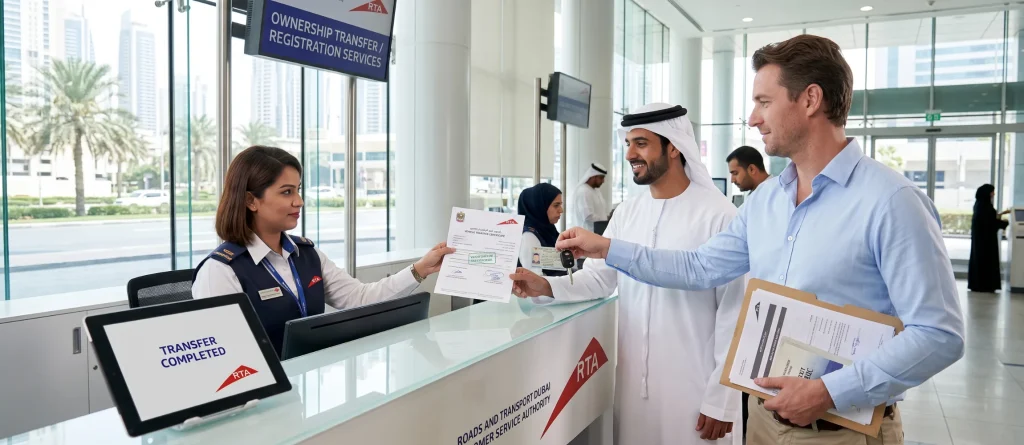
Handing over your keys before the transfer is finalized is one of the most common, and costly, mistakes expats make when they’re in a hurry. Here’s what stays on your record until the transfer is done:
- Every traffic fine issued after the handover
- Salik toll charges and parking penalties
- Civil liability if the car is involved in an accident
- Registration renewal penalties
If unresolved vehicle issues remain when you’re leaving the UAE permanently, this can result in travel bans or complications with your final exit. So even if a buyer is waiting outside your building with cash in hand, don’t release the vehicle until the transfer paperwork is confirmed.
Insurance: Don’t Cancel It Too Early
It is tempting to immediately terminate your car insurance once the deal has been sealed, even more so if each dirham makes a difference prior to relocating. This may not be such a good idea after all. The insurance should continue in effect up to the time that the registration change becomes effective. Otherwise, it may invalidate your coverage and leave you liable.
What If You’re Exporting the Car Instead of Selling Locally?
Some expats opt to transport the car along with them instead of selling it locally, especially if it’s a high-end or new car. In this case, one has to apply for an Export Certificate at the RTA, and this is one of the services provided online by the RTA, where both the seller and buyer can start the process of transferring the car online before completing it physically. It is important to note that if the buyer claims that he will export the car himself, it is not true, and it is a different procedure from transferring.
Avoiding Scams When You’re Selling Under Time Pressure
Buyers know a departure date makes sellers vulnerable, and unfortunately, a few will try to take advantage of that. A little caution now saves a lot of trouble later:
- Never accept a partial payment with a promise to “settle the rest after transfer”
- Avoid buyers who insist on driving the car away before paperwork is signed
- Confirm payment has actually cleared in your account before handing over keys, not just a screenshot
- Meet at an RTA-approved transfer location or a public, well-lit spot for cash handovers
- Be wary of anyone pressuring you to skip the official transfer “to save time”
If it feels rushed and only helps the buyer, take your time and trust your gut.
Reading the Market: What’s Happening in 2026
Staying up to date on developments in the automotive industry will help you price effectively, rather than guess. Some recent trends to keep in mind include:
- Affordability is trending up in demand. The recent trend in the market reveals that people in the UAE are becoming increasingly inclined towards purchasing cheaper cars because of higher expenses of living and high prices of insurance and fuel.
- SUVs are holding their value. Prices for larger SUVs like the Land Cruiser, Patrol, and Fortuner remain firm because demand continues to exceed supply in these segments.
- Mid-size sedans have softened. Mid-size sedan prices have corrected 5–8% from their Q3 2025 peaks as inventory has grown.
- Digital verification speeds up sales. Listings with digital certification and verified mileage records tend to sell roughly twice as fast as uncertified ones.
- EVs are gaining ground in resale. Electric vehicle sales saw a sharp rise in early 2026, meaning EV and hybrid listings are attracting more buyer attention than they did a year ago.
Following automotive updates like these before you list your car can be the difference between an average offer and a genuinely fair one, even under time pressure.
Best Time to List (If You Have Any Flexibility)
If your departure date isn’t fixed in stone yet, timing your listing can noticeably boost your response rate.
- Avoid peak summer (June–August). Many residents are traveling, and the market slows down.
- Post-Ramadan and year-end bonus season tend to bring more motivated, cash-ready buyers.
- New academic year arrivals often boost demand as new residents shop for their first UAE car.
Common Mistakes Expats Make When Selling in a Rush
- Waiting until the final 48 hours to start the process
- Accepting cash without completing the RTA transfer first
- Canceling insurance before the sale is legally finalized
- Not knowing the exact loan payoff figure, causing delays with the NOC
- Letting a buyer test-drive or use the car for days without any transfer paperwork started
What Happens After the Sale Is Complete?
Once the RTA has confirmed the transfer, your job isn’t quite finished yet. A few closing steps protect you long after you’ve boarded your flight:
- Keep a digital and printed copy of the transfer certificate for your own records
- Cancel your Salik account and unlink your payment card once the car is no longer yours
- Deregister the vehicle from any parking apps or toll accounts tied to your name
- Confirm with your bank that the loan account, if any, shows as fully closed
- Save the buyer’s contact details briefly, just in case a document query comes up later
Having this proof on hand means that if any dispute or fine surfaces after you’ve left the country, you have everything you need to resolve it remotely.
Conclusion
You don’t have to sell your vehicle while still living in the UAE. Most issues arise when the process starts too late or without proper preparation. Clearing your car loan, settling fines, getting the vehicle appraised correctly, and completing the RTA ownership transfer can make the process much easier. Whether you choose a private buyer, dealer, or cash buyer, planning ahead is important. The main goal is to complete the sale properly, remove the vehicle from your name, and leave the UAE without unnecessary delays, paperwork, or complications.
FAQ
1. Can I sell my car in the UAE after my visa is already cancelled?
A. Yes, it’s legally possible, but there’s usually a limited grace period to complete the sale and transfer. It’s far smoother to finish the sale before cancellation whenever you can manage it.
2. What happens if I can’t find a buyer before my flight?
A. You can use an instant car-buying company or a licensed dealer for a same-day sale. You’ll likely get a slightly lower price, but it avoids leaving an unsold car registered in your name after you leave.
3. Do I need my bank’s permission to sell a financed car?
A. Yes. You must clear the outstanding loan and obtain a No Objection Certificate from your bank before the RTA will process the ownership transfer.
4. Is it safe to accept a deposit before the RTA transfer is done?
A. A deposit is fine, but never hand over the car or the keys until the transfer is officially completed at the RTA. This protects you from future fines or liability.
5. Will unpaid fines or Salik charges stop my visa cancellation?
A. They can complicate your exit process. Clearing all vehicle-related dues before your final departure is one of the safest steps you can take.