Can you really sell a car that the bank still partly owns? Yes, you can, and it is more common than you might think.
The catch is that the bank keeps a legal claim on your car until the loan is cleared, so you cannot simply hand over the keys and walk away. The good news is that the process is simple once you know the order of steps.
In this guide, you will learn how to sell a car with a bank loan in the UAE, which papers you need, what fees to expect, and which mistakes to avoid. Let’s walk through it together.
Why the Bank Matters When You Sell?
When you take a car loan in the UAE, the bank registers a mortgage (a lien) on your car. This means the car is your collateral. A financed car can’t change hands until the loan is settled and the bank releases the mortgage.
Think of it like this: the car is in your name, but the bank holds a key to it. Until the bank gives that key back, the traffic authority will not transfer ownership to a new buyer. So every method to sell a financed car UAE comes down to one goal: pay off the bank first, then transfer the car.
Your Three Main Options
There is more than one way to do this. Here is a quick look at each.
| Option | How it works | Best for |
| Pay off the loan yourself | You clear the balance from your savings, then sell the car freely | People with cash available |
| Buyer pays the bank directly | The buyer pays the outstanding amount to your bank, and you get the rest | Sellers whose car is worth more than the loan |
| Buyer’s loan clears yours | If the selling price differs from the remaining loan, the bank can use the buyer’s loan to settle your balance | Buyers who are also financing |
If you can manage it, the first option is the cleanest. You can settle car loan before selling, and the buyer gets a car with no strings attached.
Step-by-Step: How to Sell a Financed Car in the UAE
Selling a car that still has a bank loan is easy when you follow the right order, from getting your liability letter to transferring ownership. Please read the whole article, because skipping even one step can delay your sale or cost you extra money.
Step 1: Check How Much You Still Owe
You should first check your loan statement or application in the banking application. You will find your balance, monthly payment, and remaining payments.
Then get a rough idea of your car’s market value. Check similar cars on popular UAE listing sites. If your car is worth more than you owe, you are in a good position. If it is worth less, you will need to cover the gap yourself. This is often called negative equity.
Step 2: Ask Your Bank for a Liability Letter
This is the most crucial stage. The car loan liability letter in the UAE is a formal letter issued by the bank. This letter will indicate the amount required to clear the loan, including the early settlement fee. It also shows the validity period of that amount. You can request it through the bank’s online app or website, orin person.
Some banks charge a small fee for this letter. Published fee schedules from UAE banks show amounts such as AED 63 per request at one bank, and AED 89.25 at another for letters addressed to banks. Always check your own bank’s current charges.
Step 3: Understand the Early Settlement Fee
Paying off a loan early usually costs something. This is called an early settlement car loan UAE, and it is set out in your loan agreement.
| Item | What to expect |
| Standard fee | Often 1% of the remaining principal, capped at AED 10,000, plus VAT |
| Some banks | 1.05% of the outstanding balance, which includes VAT |
| Liability letter | Varies by bank, from free to around AED 90 |
Here is an easy example. If you owe AED 50,000, a 1% fee would be around AED 500, before VAT. For example, ADCB states that its 1% fee follows UAE Central Bank rules. Your own loan agreement and Key Facts Statement are the final word, so read them carefully. Fees and rules can change.
Step 4: Find a Serious Buyer
This way, you can now start listing your vehicle. It is important for you to be truthful and frank. Make all buyers aware that the car is on a bank loan and that the transaction will take place through the bank.
You can sell in three common ways:
- Private sale: You list the car online or through friends and family. This often gets the best price, but it takes more effort.
- Car dealers or buyers: Dealers can handle the loan paperwork for you, though their offer may be lower.
- Online car-buying services: These give a quick quote and manage most steps for you.
Step 5: Settle the Loan Together With the Buyer
Many sellers do this part in person. The buyer goes with you to the bank to pay off the remaining auto loan. The buyer pays the bank the amount shown in your liability letter. If the car sells for more than you owe, you keep the rest. If it sells for less, you pay the difference.
Never accept the full price in cash and promise to “pay the bank later.” If you miss payments, the bank can still hold you responsible, and the buyer may be left with a car they cannot register.
Step 6: Get the Clearance Letter and Mortgage Release
Once the bank is fully paid, ask for two things:
- A loan clearance (or release) letter
- Confirmation that the mortgage has been released
This proof is essential to remove the mortgage on your car through the RTA. In other emirates, the local licensing authority handles the process. Do not skip this step. Without it, the transfer can’t proceed. Processing can take a few days. One guide puts early settlement processing at around 5 to 10 working days in the UAE. Ask your bank for its exact timeline.
Step 7: Complete the Ownership Transfer
Once the mortgage is cleared, you can transfer the vehicle to the buyer through the relevant licensing authority. In Dubai, this is the RTA. In other emirates, it is a similar body. Most centers require both parties to be present in person.
You will usually need a valid vehicle test (inspection) certificate, so check with your local authority. If the car passes, the RTA will issue a certificate. Finally, cancel or transfer your car insurance, and remove any Salik tag or toll account linked to you.
Documents You Will Need
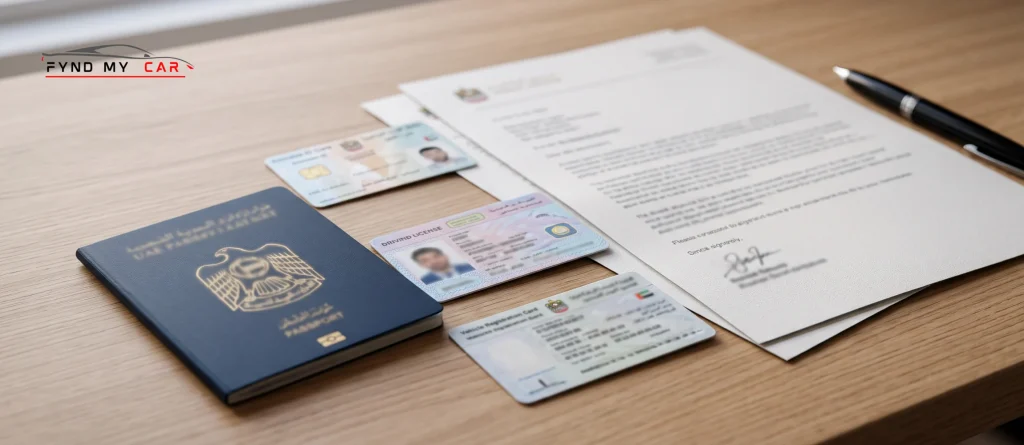
Keep these ready before you meet the buyer or the bank. Typical documents include your Emirates ID, UAE driving license, car registration card, bank clearance letter, and passport with residence visa. Your buyer will also bring their own ID and license.
| Who | Documents |
| Seller (you) | Emirates ID, passport and visa copy, driving licence, vehicle registration card (Mulkiya), liability letter, clearance letter |
| Buyer | Emirates ID, driving licence, proof of payment or loan approval |
| Car | Valid inspection report, insurance details |
Requirements can differ by emirate and by bank, so confirm the list before you go.
Common Mistakes to Avoid
Selling a financed car is easy when you stay careful. These are the mistakes people make most often:
- Selling without telling the bank: It can be hard to sell a car in the UAE without the lender’s permission, so inform the bank before you sell.
- Taking cash and settling later: This puts both you and the buyer at risk.
- Using an old liability figure: The amount changes as your balance and the validity date change. Get a fresh letter.
- Ignoring the early settlement fee: Add it to your cost so you are not surprised.
- Skipping the written proof: Always keep copies of the clearance letter, receipts, and transfer papers.
- Rushing the deal: One reader reported paying a disputed early settlement fee in a rush because the buyer wanted a quick transfer. Read your agreement first, and take your time.
Tips to Get a Better Deal
A few small habits can save you money and stress:
- Ask your bank for the exact settlement amount before you list the car.
- Compare your bank’s fee against what you would pay in monthly interest if you kept the loan.
- Clean the car and fix small issues before taking photos.
- Keep your service history handy. It builds buyer trust.
- Meet at a bank branch to exchange the money. It is safe and clear.
Stay Updated
Rules, fees, and procedures can vary, and banks may adjust their fees as well. Keep an eye on changes by following credible auto news and your bank’s website. This way, you’ll know about any new rules before selling your car.
Final Thoughts
Selling a car while it is still on a loan may seem complicated at first; however, following a simple roadmap will keep everything running smoothly. It boils down to four steps: getting your liability letter, determining the total settlement figure, paying off your loan, and obtaining proof of clearance. Once the bank clears the claim, ownership will transfer without a hitch. Being proactive and clearing all financial issues before transferring ownership keeps both parties safe from complications.
FAQ
1. Can I sell my car in the UAE if the loan is not fully paid?
A. Yes. You must involve your bank, though. The loan must be cleared and the mortgage released before ownership can be transferred. This can happen through your own payment or the buyer’s payment to the bank.
2. What is a liability letter, and how do I get one?
A. It is a letter from your bank showing the exact amount needed to close your loan, along with how long that amount stays valid. You can usually request it through the bank’s app, website, or branch. Some banks charge a small fee.
3. How much is the early settlement fee on a car loan?
A. It is commonly 1% of the remaining principal, capped at AED 10,000, plus VAT. Some banks list it as around 1.05% with VAT included. Check your own loan agreement for the exact figure.
4. What if my car is worth less than my loan?
A. Then you will need to pay the difference to the bank from your own pocket before the mortgage is released. Some people ask the bank about options, such as a payment plan, but approval depends on the bank.
5. How long does the whole process take?
A. It depends on your bank and the buyer. Settlement alone can take several working days, and the ownership transfer can often be done in a single visit once the mortgage is removed. Start early and ask your bank for its timeline.