Mitsubishi Destinator

UAE FyndmycarMitsubishi Destinator

N/A

In the UAE, the 2026 Mitsubishi Destinator is priced starting at AED 69,900 for the M 2WD base model, with the premium P 2WD variant reaching AED 89,900. This vehicle is available in three distinct versions, with the M 2WD serving as the entry-level option and the P 2WD as the top-tier offering. These prices are uniform throughout the UAE, covering cities like Dubai, Abu Dhabi, and Sharjah. However, the final cost on the road might differ slightly due to factors such as insurance, registration fees, and additional accessories.
Read more

Mitsubishi Destinator

AED 69,900 - 89,900

Body Type

Van

Fuel Type

Petrol

Transmission

Automatic

Mileage

N/A

Mitsubishi Destinator Key Specifications

Engine cc

1498

Max Torque

250Nm

No of Airbags

2

BootSpace

N/A

Ground Clearance

214 mm (with skid cover), 244 mm (without)

Fuel Tank Capacity

50 liters

Seating Capacity

Yes

Drive Type

Normal/Wet/Gravel/Mud/Tarmac

Latest Updates on Mitsubishi Destinator

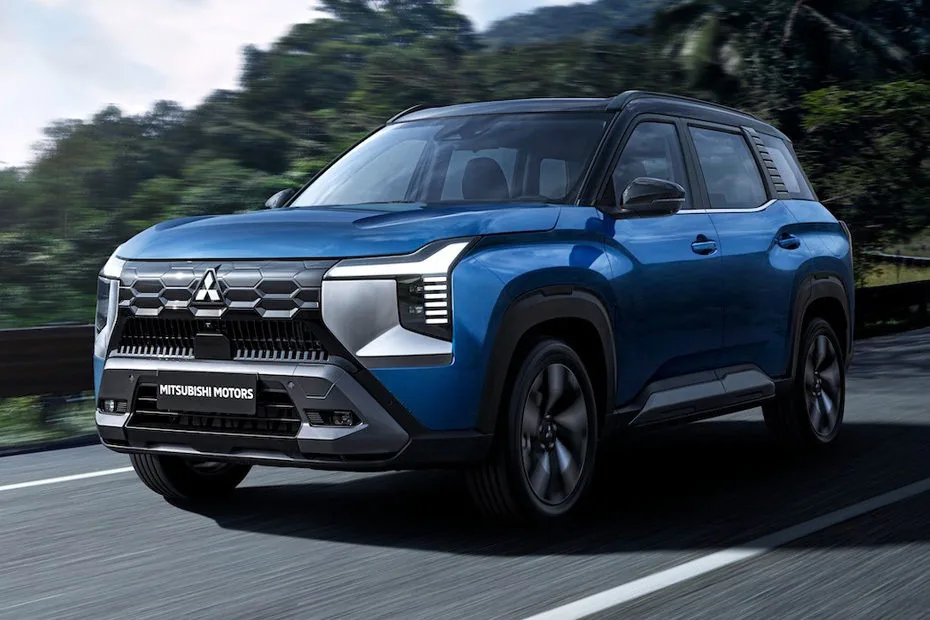
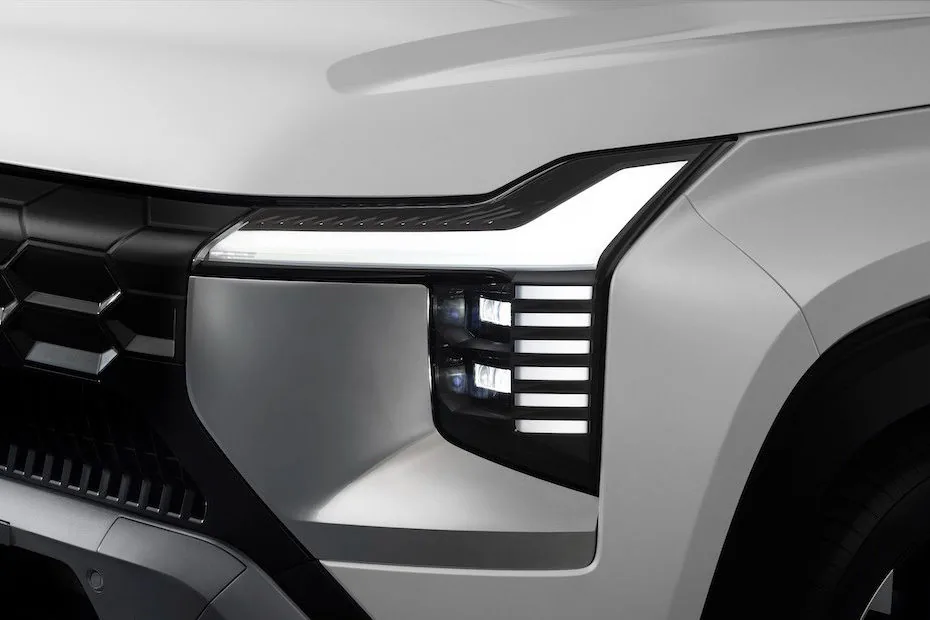
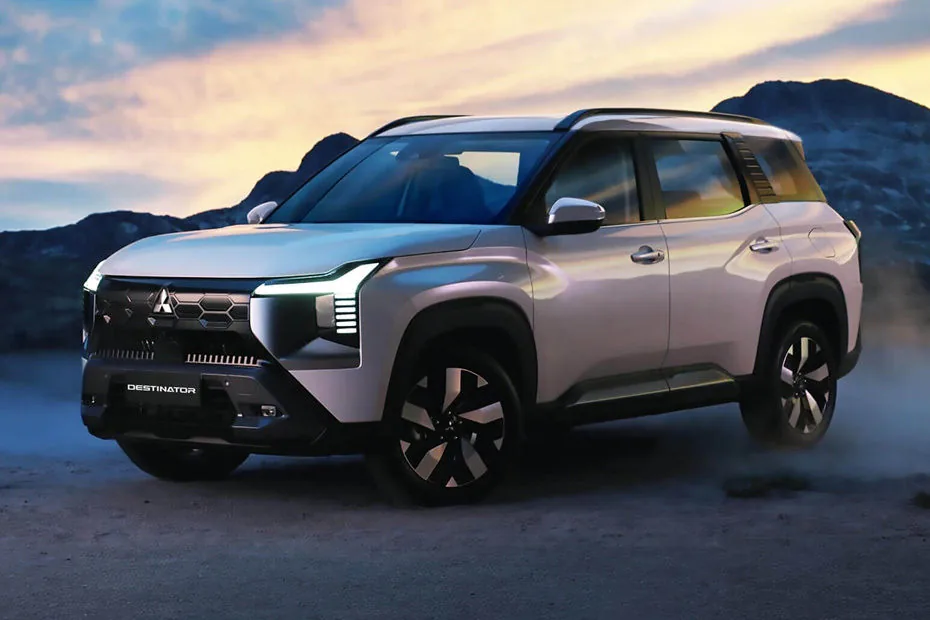
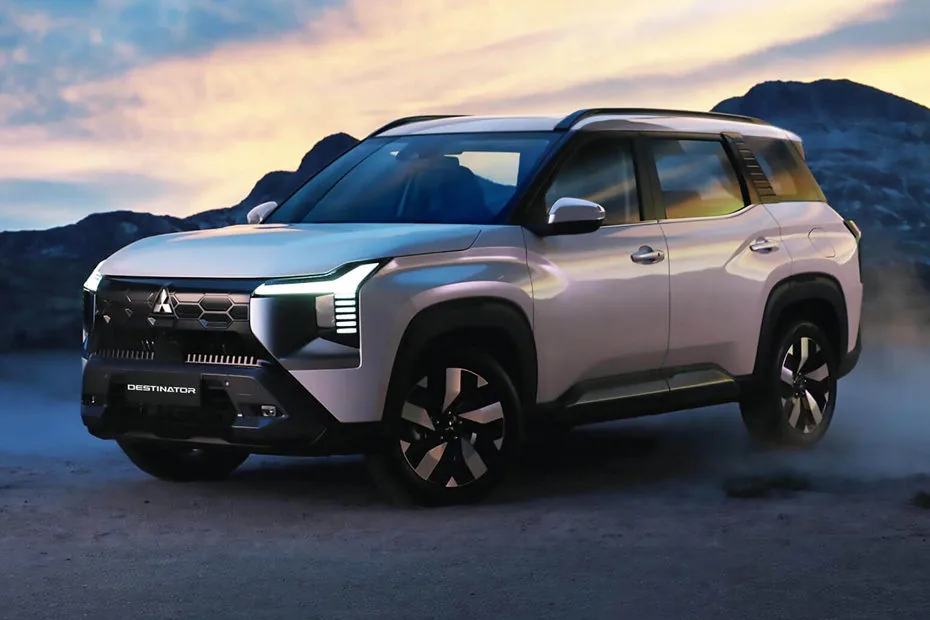
The all-new Mitsubishi Destinator is a family-SUV with a bold three-row crossover designed for modern Middle Eastern lifestyles. Launched in January 2026, the Destinator blends rugged capability with refined elegance, features a striking Dynamic Shield acrylic grille, split LED daytime running lamps, finely sculpted fender flares and a commanding stance with the 18-inch alloy wheels.
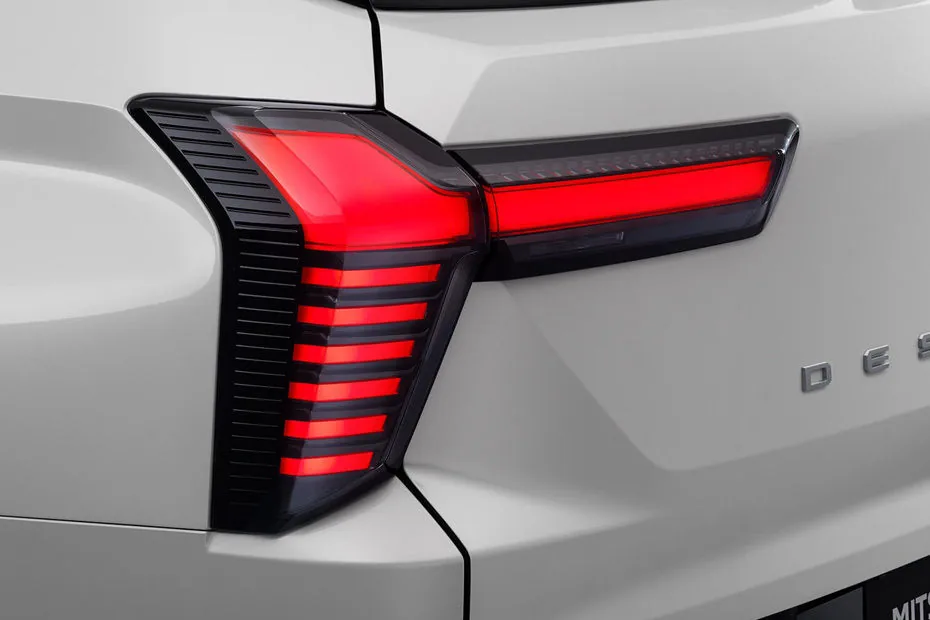
Its rear design echoes Pajero heritage through the Hexaguard Horizon-inspired hexagonal motif. Inside, the spacious, premium cabin for seven seats features soft-touch surfaces, a panoramic sunroof and a monolithic 12.3-inch touchscreen accompanied by an 8-inch fully digital driver display. Multicolor ambient lighting, Yamaha-tuned sound, fold-flat tables, and ample USB-A/C ports in every row enhance comfort and connectivity. High ground clearance, wide angles, and five terrain modes ensure confident driving in UAE cityscapes and escaping into the dunes.

What's New on Mitsubishi Destinator?

Introduction

  • The budget three-row SUV segment in the UAE has always been about one thing: space. Families need it, weekend trips demand it, and the market keeps asking for it. Mitsubishi has them in its portfolio, but what was missing was a true budget option. The answer is the Destinator, a seven-seater that arrived in January 2026 with a starting price of AED 69,900, which fills that gap. It positioned itself. somewhere between affordable practicality and genuine family usability, targeting buyers who need three rows without spending six figures. As expected, in a popular segment like this, the competition is brutal: the Toyota Fortuner, Kia Sorento, Hyundai Santa Fe, and even the ageing but reliable Mitsubishi Montero Sport. But here's the thing about the Destinator: its price grabs your attention, and it's equipped like it might actually deserve it.
  • Interior Key Highlights Step inside, and the cabin quality surprises. Soft-touch materials where your hands go, decent stitching on the dashboard, and a build quality that feels solid, not hollow. The dual-tone black interior with silver accents looks more premium than the price indicates. The 12.3-inch touchscreen is the real highlight of the dashboard, along with an 8-inch digital driver display. Both are super crisp and responsive and don't lag like cheaper infotainment systems. The fit and finish, as expected, is just okay, but there are no obvious panel gaps or rattles. For a sub-AED 100k SUV, that is tolerable. Front Seat The driver's seat offers decent adjustability – not power adjustment on the base variant, but manual with enough range that most drivers will find a comfortable position. The higher P trim gets power adjustment, which matters more than you'd think on long drives. The leatherette upholstery is standard on the top trim, and while it's not real leather, it's convincing enough and easier to clean when kids spill juice. The steering wheel is leather-wrapped on the H and P trims, with audio and cruise controls integrated. Electronic Parking Brake The EPB is standard across all trims and includes auto hold, which is a godsend in Dubai traffic. You can now stop pressing the brake pedal at every red light. Hill-start assist is also standard, though UAE roads rarely test it unless you're in Ras Al Khaimah. Rear Seat The second row is where the Destinator actually scores well. Three adults fit comfortably, or two with a child seat between them. The 40:20:40 split-folding setup means you can drop just the centre section to carry long items while keeping two passengers seated. Legroom is genuinely good; taller passengers won't be jamming their knees into the front seatbacks. The recline angle is adjustable, and there are dedicated AC vents with USB-A and USB-C ports. Cup holders in the fold-down armrest are a nice touch. The third row? It's usable. Not for six-hour road trips, but for school runs, weekend errands, or short drives, it works. AC Vents Automatic climate control is standard on the H and P trims. The base M trim gets manual AC, which frankly is a lot lower in the UAE. The system cools quickly once running, and the rear vents ensure third-row passengers cool down quickly. Also, it's worth mentioning that cabin filtration is decent; dust and odours are mostly kept out. Storage Options The cabin gets decent storage space, like door pockets that fit 1-litre bottles, a centre console deep enough for tablets, and cubbies everywhere. The fold-flat tables on the front seatbacks are genuinely useful for kids on long drives. The glovebox is adequately sized for documents and charging cables. Bottle holders and cup holders are scattered throughout all three rows. Overall, quite a thoughtful design. Armrest The front centre armrest doubles as storage. It actually feels nicely padded, comfortable, and positioned at a natural height. The second-row armrest folds down from the centre seat and includes cup holders. The third row doesn't get an armrest, which is fine; there's barely enough room back there as it is. Charging Options There are USB-A and USB-C ports in all three rows. The first row also gets a 12V socket and a wireless charging pad. Boot Space A three-row SUV is already big enough for space, and here with all three rows up, you get about 150 litres of cargo space. That's enough for groceries or a couple of backpacks, but not much more. Fold the third row flat, and it expands to roughly 450 litres, adequate for weekend luggage. Drop the second row too, and you unlock nearly 1,100 litres, which is van territory.

Exterior

  • One thing is pretty clear from the first glance itself: Mitsubishi's designers borrowed from the Pajero's heritage, and it shows. The Dynamic Shield front grille is not necessarily subtle; it is an acrylic panel framed by split LED daytime running lights that give it the perfect look. The hexagonal motif at the rear, inspired by what Mitsubishi calls the Hexaguard Horizon, ties the design together, though whether you find it handsome or merely busy depends on your taste. The dimensions tell the real story: 4,680 mm long, 1,840 mm wide, and 1,755 mm tall. The ground clearance sits at 214 mm with the skid plate and 244 mm without it. Not Wrangler levels, but enough to handle mall parking curbs and the occasional wadi road without drama.
  • Those LED projectors are not just meant to look good; they are bright enough for highway night drives and handle Dubai's dusty evenings better than halogen setups ever could. The split DRL design divides opinions but looks unique. The fog lamps are standard on higher trims, and yes, they actually help when morning fog rolls in along the E11.
  • The side profile is where the Destinator now makes quite an impression, and Mitsubishi deserves some credit. Its roof rails are not just cosmetic, but they are rated for luggage carriers, which matters when you are heading to Hatta with camping gear. The body-coloured door handles and power-folding mirrors with LED turn signals are standard across the range, which is more than you can say for some competitors.
  • You get 18-inch alloys in 225/55R18 tyres; that is actually a sensible combination, something comfortable enough for daily commutes. The base M trim gets 16-inch steels, which is where Mitsubishi starts cutting costs.
  • The rear taillamps look like the front's split theme, giving it a light signature that's modern without being flashy. The high-mounted stop lamp is standard, as is a rear wiper with washer, essential when following trucks on the E311. The spoiler on higher trims adds a sporty touch, though its aerodynamic contribution is probably minimal.
  • Six colours are available: Red Metallic, Black Mica, Blade Silver Metallic, Graphite Gray Metallic, Lunar Blue Mica, and Quartz White Pearl.
  • Ride & Handling Key Highlights The ride quality is one of the Destinator's strengths. And so it is no surprise to find that the MacPherson strut front and torsion beam rear suspension are tuned for comfort, not sportiness. That means the bumps are absorbed well, even with passengers in all three rows. The torsion beam does get a bit bouncy over consecutive undulations, but it's never harsh. Similarly, body roll in corners is noticeable; this is a tall, softly developed SUV, but it's predictable and never alarming. The steering is light, which makes parking simple but provides little feedback at highway speeds. Most buyers will never leave pavement, and that's fine; the Destinator certainly is not built for dunes.
  • The ride quality is one of the Destinator's strengths. And so it is no surprise to find that the MacPherson strut front and torsion beam rear suspension are tuned for comfort, not sportiness. That means the bumps are absorbed well, even with passengers in all three rows. The torsion beam does get a bit bouncy over consecutive undulations, but it's never harsh. Similarly, body roll in corners is noticeable; this is a tall, softly developed SUV, but it's predictable and never alarming. The steering is light, which makes parking simple but provides little feedback at highway speeds. Most buyers will never leave pavement, and that's fine; the Destinator certainly is not built for dunes.
  • Engine & Fuel Consumption Key Highlights Specification Detail Engine 1.5L turbocharged 4-cylinder petrol Power Output 163 hp @ 5,600 rpm Torque 250 Nm @ 1,500-4,500 rpm Transmission CVT automatic Fuel Economy 15-16 km/L (estimated) Fuel Tank Capacity 50 liters Drivetrain Front-wheel drive with Active Yaw Control Drive Modes Eco, Normal, Sport, Tarmac, Wet, Gravel, Mud Suspension MacPherson strut (front), torsion beam (rear) Seating Capacity Seven passengers Top Speed 175 km/h (estimated) 0-100 km/h 11 seconds (estimated) Ground Clearance 214 mm (with skid cover), 244 mm (without) City Performance One key aspect is quite clear: the 1.5L turbo is small for a seven-seater, and it feels rather quick. While driving around town, the Destinator is fine, responsive enough for merges, and light enough to park easily, and the CVT doesn’t look for gears in congested situations. The turbo lag is noticeable below 2,000 rpm, but once boost builds, it pulls adequately. The fuel economy in the city is decent; expect around 12-14 km/L with AC running and moderate driving. The drive modes are a great help: Eco dulls throttle response but improves economy; Normal is the default; Sport sharpens things up marginally. Highway Performance This is where the Destinator's limitations show, if you consider them that way. The 163 hp engine is just what you need for the city but not known for the fun, speedy drives on the highway. Overtaking loaded trucks on the E11 means you need to plan. requires planning. Wind noise is well-controlled, though tyre roar comes through on rough asphalt. The CVT is smooth but not exciting. This SUV is clearly a family hauler, not a sports car, and it is better you keep your expectations accordingly.

Interior

  • Step inside, and the cabin quality surprises. Soft-touch materials where your hands go, decent stitching on the dashboard, and a build quality that feels solid, not hollow. The dual-tone black interior with silver accents looks more premium than the price indicates. The 12.3-inch touchscreen is the real highlight of the dashboard, along with an 8-inch digital driver display. Both are super crisp and responsive and don't lag like cheaper infotainment systems. The fit and finish, as expected, is just okay, but there are no obvious panel gaps or rattles. For a sub-AED 100k SUV, that is tolerable.
  • The driver's seat offers decent adjustability – not power adjustment on the base variant, but manual with enough range that most drivers will find a comfortable position. The higher P trim gets power adjustment, which matters more than you'd think on long drives. The leatherette upholstery is standard on the top trim, and while it's not real leather, it's convincing enough and easier to clean when kids spill juice. The steering wheel is leather-wrapped on the H and P trims, with audio and cruise controls integrated.
  • The EPB is standard across all trims and includes auto hold, which is a godsend in Dubai traffic. You can now stop pressing the brake pedal at every red light. Hill-start assist is also standard, though UAE roads rarely test it unless you're in Ras Al Khaimah.
  • The second row is where the Destinator actually scores well. Three adults fit comfortably, or two with a child seat between them. The 40:20:40 split-folding setup means you can drop just the centre section to carry long items while keeping two passengers seated. Legroom is genuinely good; taller passengers won't be jamming their knees into the front seatbacks. The recline angle is adjustable, and there are dedicated AC vents with USB-A and USB-C ports. Cup holders in the fold-down armrest are a nice touch. The third row? It's usable. Not for six-hour road trips, but for school runs, weekend errands, or short drives, it works.
  • Automatic climate control is standard on the H and P trims. The base M trim gets manual AC, which frankly is a lot lower in the UAE. The system cools quickly once running, and the rear vents ensure third-row passengers cool down quickly. Also, it's worth mentioning that cabin filtration is decent; dust and odours are mostly kept out.
  • The cabin gets decent storage space, like door pockets that fit 1-litre bottles, a centre console deep enough for tablets, and cubbies everywhere. The fold-flat tables on the front seatbacks are genuinely useful for kids on long drives. The glovebox is adequately sized for documents and charging cables. Bottle holders and cup holders are scattered throughout all three rows. Overall, quite a thoughtful design.
  • The front centre armrest doubles as storage. It actually feels nicely padded, comfortable, and positioned at a natural height. The second-row armrest folds down from the centre seat and includes cup holders. The third row doesn't get an armrest, which is fine; there's barely enough room back there as it is.
  • There are USB-A and USB-C ports in all three rows. The first row also gets a 12V socket and a wireless charging pad.
  • A three-row SUV is already big enough for space, and here with all three rows up, you get about 150 litres of cargo space. That's enough for groceries or a couple of backpacks, but not much more. Fold the third row flat, and it expands to roughly 450 litres, adequate for weekend luggage. Drop the second row too, and you unlock nearly 1,100 litres, which is van territory.
  • Safety Key Highlights Mitsubishi Safety Sensing (MMSS) is standard on the P trim, partial on H, and mostly absent on M. This is where variant choice matters. The P trim gets: Six SRS airbags Anti-Lock Braking System Electronic Brakeforce Distribution Electronic Stability Control Traction Control Hill-Start Assist Rearview camera with dynamic guidelines 360-degree Multi-View Monitor Front and rear parking sensors Blind-Spot Collision Warning Lane Keeping Assist Lane Following Assist Forward Collision-Avoidance Assist Automatic Emergency Braking Adaptive Cruise Control Automatic High Beam Tire Pressure Monitoring System (TPMS) ISOFIX child seat anchors Emergency Stop Signal Emergency call function If safety tech matters, and it should, the P variant is the only real option.

Powertrain

  • Front-wheel drive with Active Yaw Control
  • Eco, Normal, Sport, Tarmac, Wet, Gravel, Mud
  • MacPherson strut (front), torsion beam (rear)
  • 214 mm (with skid cover), 244 mm (without)
  • One key aspect is quite clear: the 1.5L turbo is small for a seven-seater, and it feels rather quick. While driving around town, the Destinator is fine, responsive enough for merges, and light enough to park easily, and the CVT doesn’t look for gears in congested situations. The turbo lag is noticeable below 2,000 rpm, but once boost builds, it pulls adequately. The fuel economy in the city is decent; expect around 12-14 km/L with AC running and moderate driving. The drive modes are a great help: Eco dulls throttle response but improves economy; Normal is the default; Sport sharpens things up marginally.
  • This is where the Destinator's limitations show, if you consider them that way. The 163 hp engine is just what you need for the city but not known for the fun, speedy drives on the highway. Overtaking loaded trucks on the E11 means you need to plan. requires planning. Wind noise is well-controlled, though tyre roar comes through on rough asphalt. The CVT is smooth but not exciting. This SUV is clearly a family hauler, not a sports car, and it is better you keep your expectations accordingly.
  • Features Key Highlights 12.3-inch touchscreen with Apple CarPlay and Android Auto 8-inch digital driver display 18-inch alloy wheels Leatherette upholstery Fabric upholstery Automatic climate control Yamaha Dynamic Sound audio system 6-speaker audio (M and H trims) Keyless entry and push-button start Electronic parking brake with auto hold Wireless charging pad Panoramic sunroof Cruise control Rearview camera 360-degree Multi-View Monitor Five drive modes: Eco, Normal, Tarmac, Wet, Gravel, Mud Fold-flat tables on front seatbacks 64-color ambient lighting Roof rails
Read More

Mitsubishi Destinator Specifications

  • Engine and Performance
  • Dimensions and Weight
  • Capacity
  • Suspension Brakes and Steering
  • Tyres and Wheels
Displacement (CC)
1498 cc
Power
161Hp
Torque
250Nm
Drivetrain
Front-wheel drive with Active Yaw Control
Top Speed
175 km/h (estimated)
Max Power
161Hp
Max Torque
250Nm
Length
4680 mm
Width
1840 mm
Height
1780 mm
Ground Clearance
214 mm (with skid cover), 244 mm (without)
Fuel tank Capacity
50 liters
Seating Capacity
Seven passengers
Steering Type
Electric
Rear Brake Type
Disc
Front Brake Type
Ventilated Disc
Front Tyre Size
225/55R18
Rear Tyre Size
225/55R18
Tyre Type
Radial Tubeless

Mitsubishi Destinator Features

  • Comfort and Convenience
  • Locks and Security
  • Seats and Upholstery
  • Safety and Security
  • Lights
  • Instrumentation
  • Entertainment
  • Advanced Features
Remote Engine Start
1.5L
Front AC
1580
Air Conditioner
Yes
Power Windows
Yes
Heater
Yes
Rear AC
Yes
Automatic Headlamps
Yes
Power Outlets 12V
Yes
Cruise Control
Yes
Climate Control
Yes
Keyless Entry
Yes
Electric Sunroof
Yes
Central Locking
Yes
Engine Immobilizer
Yes
Driver Seat Adjustment
Sliding, Reclining, Height
ISOFIX Child Seat Mounts
Yes
Seat Upholstery
Yes
Passenger Airbags
Yes
Side Airbags
Yes
Driver Airbags
Yes
ABS
Yes
Electronic Brakeforce Distribution
Yes
Day & Night Rear View Mirror
Yes
Parking Sensors
Rear
Curtain Airbag
Yes
Hill Assist
Yes
No. of Airbags
Yes
Electronic Stability Program
Yes
Traction Control
Yes
Lane Assist
Yes
Automatic High Beam Assist
Yes
Ambient Lighting
Yes
Low Fuel Warning
Yes
Clock
Yes
Instrument Cluster
4.2 Inch
Seat Belt Warning
Yes
Door Ajar Warning
Yes
USB & Auxiliary Input
Yes
Touch Screen
Yes
FM/AM/Radio
Yes
Bluetooth Connectivity
Yes
Speakers Front
Yes
Speakers Rear
Yes
Android Auto
Yes
Apple Carplay
Yes
Portable Charging Cable
Yes
Audio System
Yes
emission_norm
Yes
anti_theft_alarm
Yes
Tacho Meter
Yes
Digital Odometer
Yes
Spare Wheel
Yes
forward_collision_avoidance_assist
Yes
Digital Key
Yes

Feedback

Your Feedback Matters!