

Budget sedans remain popular in the UAE because they offer simple driving, low running costs, and practical space for daily use. Among the most common choices are the Nissan Sunny and the Toyota Yaris. Both models have built strong reputations for reliability and affordability. With the expected 2026 versions, buyers are once again comparing them closely to understand which sedan is easier on the wallet in the long run.
This comparison focuses on total ownership costs rather than just the purchase price. Maintenance, fuel consumption, service intervals, spare parts, and resale value all play an important role when choosing a budget sedan in the UAE. The discussion around bold Nissan Sunny vs Toyota Yaris 2026 has become more relevant as many drivers want a dependable car that does not cost much to maintain over several years.
Why Budget Sedans Still Matter in the UAE
Despite the popularity of SUVs, budget sedans continue to sell well in Dubai, Sharjah, and Abu Dhabi. They are easy to drive, fuel efficient, and practical for commuting. Many residents travel long distances daily, especially between Emirates. A sedan with low fuel use and simple servicing becomes an attractive option for this type of driving.
Cars like the Sunny and Yaris also appeal to first-time buyers, small families, and people who want a second vehicle for daily errands. The 2026 updates are expected to improve features and technology while maintaining the same focus on affordability.
Engine and Performance Overview
Both sedans are designed to deliver consistent and efficient performance rather than high power.
- Nissan Sunny 2026
The Sunny is expected to continue with a 1.5-litre petrol engine. This engine focuses on smooth driving and good fuel economy. Power delivery is steady, making it suitable for daily commuting and city traffic. The CVT transmission helps keep fuel use low and makes driving simple in stop-and-go conditions.
For UAE highways, the Sunny offers stable cruising at normal speeds, although it is not built for aggressive acceleration.
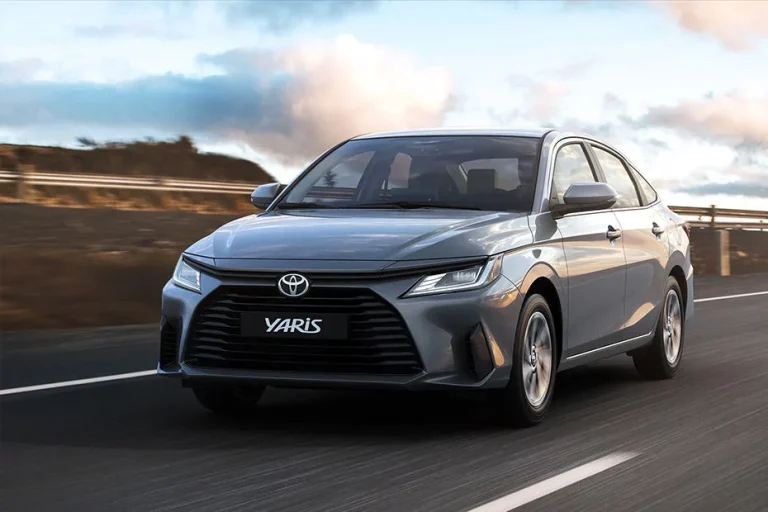
- Toyota Yaris 2026
The Yaris sedan is also expected to use a 1.5-litre petrol engine paired with a CVT transmission. Toyota’s engine tuning often focuses on reliability and long-term durability. Acceleration is slightly quicker compared with the Sunny, and the car feels responsive in city traffic.
In terms of daily usability, both sedans perform well, but neither is designed for high-performance driving. Their main advantage lies in efficient and dependable operation.
Fuel Efficiency
Fuel consumption is one of the biggest concerns for budget car buyers in the UAE. With frequent commuting and long highway travel, fuel savings can make a noticeable difference over time.
The Nissan Sunny usually delivers around 18 to 19 km per litre under normal driving conditions. The Toyota Yaris offers a similar range, often between 19 and 20 km per litre depending on driving habits and road conditions.
In real-world use, the difference is small. However, Toyota engines often maintain consistent efficiency even after many years of use. This can give the Yaris a slight advantage for drivers planning to keep the car for a long period.
Spare Parts Availability
Availability of parts affects maintenance cost and repair time. In the UAE, both Nissan and Toyota have well-established supply chains.
Nissan Sunny parts are widely available and usually cheaper than many competitors. Common components like filters, brake pads, and suspension parts are easy to find.
Toyota parts are also easy to source but may carry slightly higher prices because of brand demand and durability standards. However, Toyota components often last longer, which can balance out the overall cost.
Technology and Features
The 2026 versions of both sedans are expected to bring small improvements in technology. These may include updated infotainment systems, improved connectivity features, and better driver-assist systems.
Safety features such as multiple airbags, stability control, and parking sensors are likely to remain standard in most trims.
These improvements follow ongoing bold automotive updates, where manufacturers gradually add more technology even to entry-level cars.
Which Sedan Is Cheaper to Maintain?
When comparing the Sunny and Yaris purely on maintenance cost, the Nissan Sunny generally comes out slightly cheaper for routine servicing and spare parts.
However, the Toyota Yaris often compensates with stronger resale value and long-term reliability. For some buyers, that balance makes it a better overall investment.
The choice depends on what matters more to the driver: lower immediate service costs or stronger long-term value.
Conclusion
Both the Nissan Sunny 2026 and Toyota Yaris 2026 remain strong choices for buyers looking for affordable and reliable transportation in the UAE. The Sunny stands out for its low service costs and simple maintenance, making it attractive for daily commuters who want minimal running expenses. The Yaris, on the other hand, offers excellent reliability and higher resale value. In the end, both sedans deliver practical ownership, but the Sunny may be slightly cheaper to maintain in the short term.
FAQs
1. Which car has lower maintenance costs in the UAE, Sunny or Yaris?
ANS- The Nissan Sunny usually has slightly lower service and spare-parts costs compared with the Toyota Yaris.
2. Is the Toyota Yaris more reliable than the Sunny?
ANS- Both cars are reliable, but Toyota vehicles often have a stronger global reputation for long-term durability.
3. Which sedan offers better fuel efficiency?
ANS- Fuel economy is very similar, although the Yaris may have a small advantage in some driving conditions.
4. Are spare parts easy to find in the UAE for both cars?
ANS- Yes, both Nissan and Toyota have wide service networks and good parts availability across the UAE.
5. Which car has better resale value?
ANS- The Toyota Yaris generally holds its resale value slightly better in the UAE used-car market.