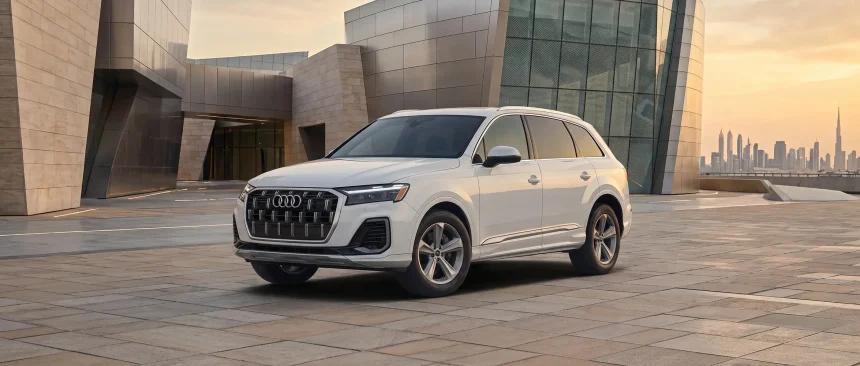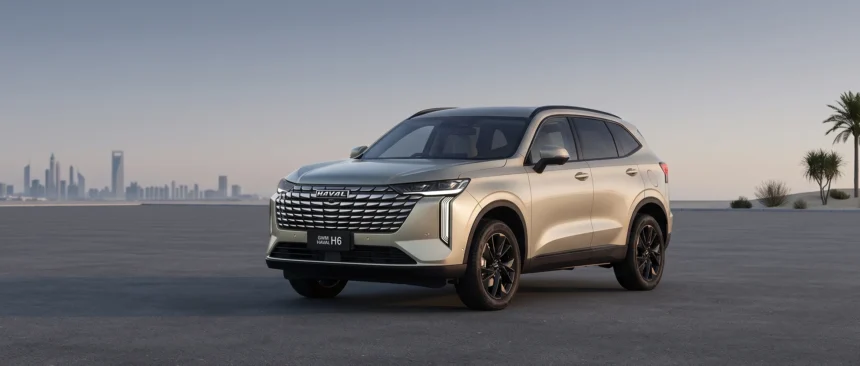
Are you living in Dubai and worried about commuting between emirates? Whether it is the daily trek from Sharjah to Dubai or the long stretch between Abu Dhabi and the Northern Emirate, you will need more than a standard vehicle.
For residents seeking the perfect balance of fuel efficiency, cabin quietness, and advanced safety features, crossover SUVs in the UAE have become the gold standard.
Finding a vehicle that handles high-speed stability while keeping monthly fuel bills manageable is essential.
This guide explores the best crossovers under AED 130,000, specifically through the lens of long-distance highway performance, focusing on how these vehicles handle the punishing wind noise and road roar typical of UAE motorways.
Understanding the Crossover Segment for the UAE Market
Before diving into specific models, it is essential to define what makes a crossover suitable for the UAE. A crossover, or Crossover Utility Vehicle, is built on a unibody chassis, similar to a sedan rather than the body-on-frame construction used for heavy-duty off-road SUVs. This distinction is critical for highway commuters.
In the UAE, crossover SUVs UAE buyers look for must bridge the gap between compact dimensions for city parking and a planted feel on the highway. At 140 km/h, a vehicle with poor aerodynamics or a high center of gravity can feel “floaty” or susceptible to crosswinds.
According to the current model market analysis, the best options in the sub-130k category are those that offer aerodynamic efficiency and suspension tuning that favors stability over extreme off-road articulation.
The NVH Factor: The Battle Against 140 km/h Wind Noise
The E11 is a marvel of engineering, but it presents a unique challenge, i.e, sustained high-speed travel. Recent vehicle testing in the region indicates that the most common complaint from long-distance commuters is cabin noise.
NVH stands for Noise, Vibration, and Harshness.
- Noise is what you hear (engine drone, wind whistling past A-pillars, tire roar).
- Vibration is what you feel (steering wheel jitter, floorboard humming).
- Harshness is the sudden impact of road imperfections (expansion joints on bridges).
At 140 km/h, wind resistance increases exponentially. This creates a “whistling” effect around the side mirrors and windows. In a budget-friendly crossover, manufacturers often skimp on sound deadening to save costs.
Best Crossovers Under AED 130,000
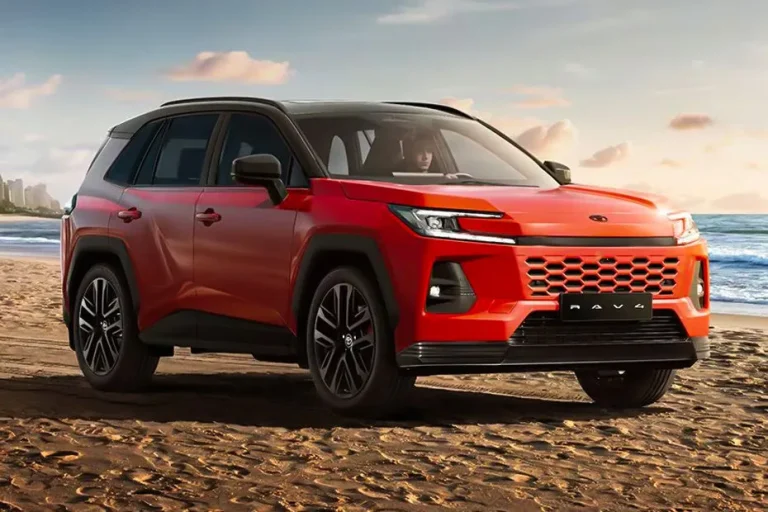
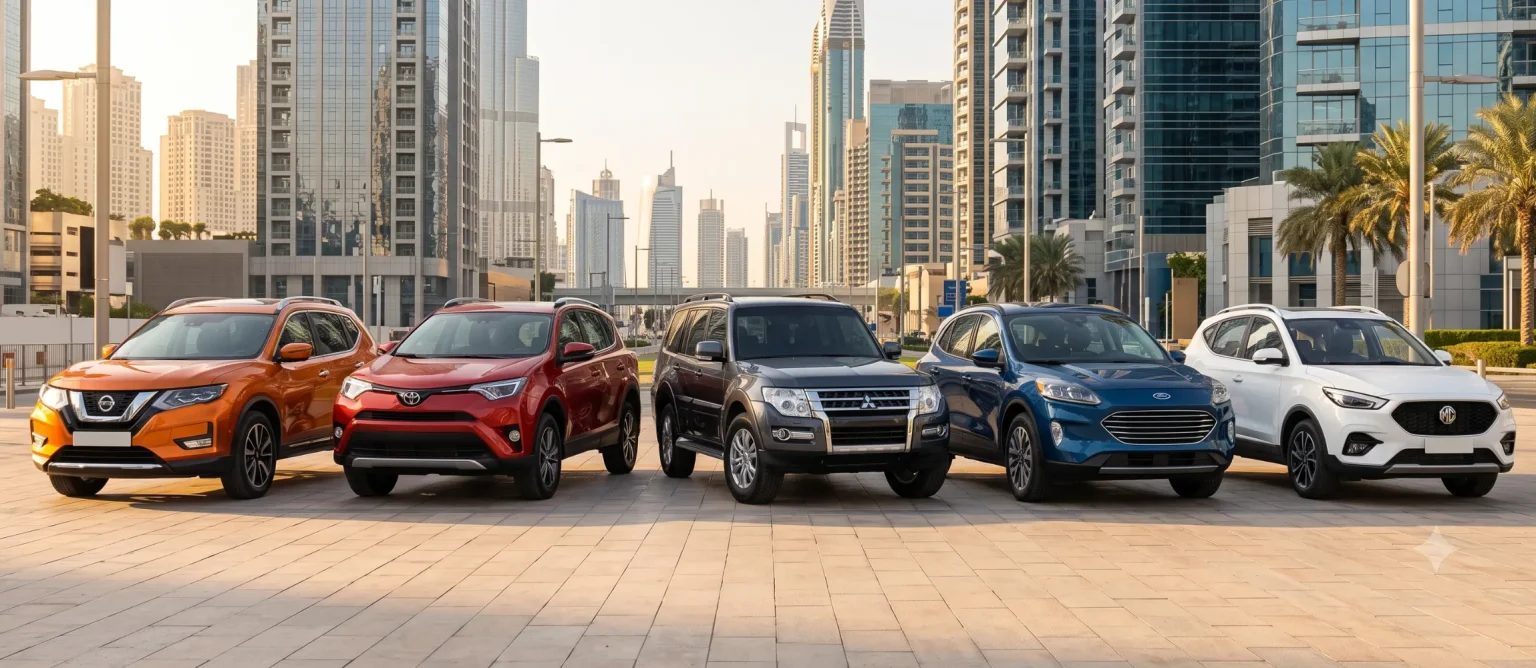
1. Toyota RAV4 (2.5L Variants)
The Toyota RAV4 remains a titan in the UAE market, primarily due to its legendary reliability and resale value. For highway commuters, the 2.5L engine provides enough punch to merge confidently onto the E11 or E311.
Price Range: Starting from approx. AED 99,900 to AED 124,000 for mid-spec trims.
Highway Edge: Excellent fuel economy (approx. 14–15 km/L) and a well-insulated cabin that minimizes wind noise at 120 km/h.
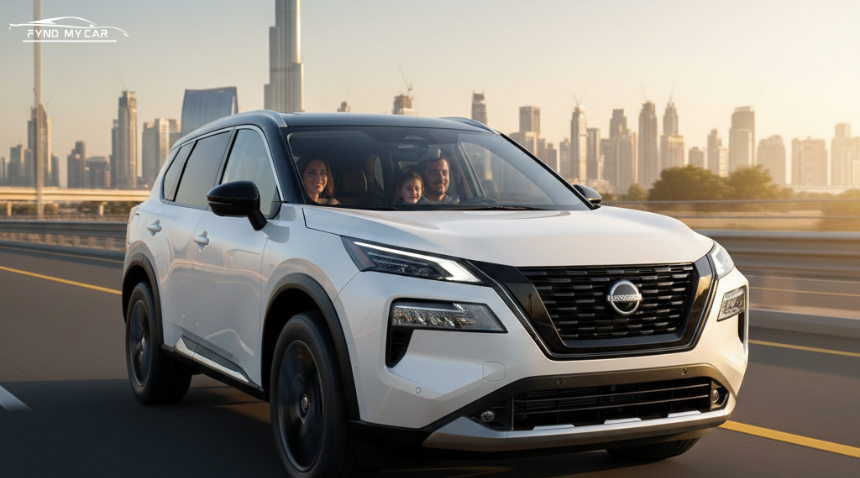
2. Nissan X-Trail
The latest iteration of the Nissan X-Trail focuses heavily on “Intelligent Mobility.” It is one of the most comfortable crossover SUVs in the UAE for long hours behind the wheel, thanks to its “Zero Gravity” seats designed to reduce fatigue.
Price Range: Starting around AED 101,900.
Highway Edge: The X-Trail features advanced driver-assist tech, including Intelligent Cruise Control and Lane Intervention, which are lifesavers on monotonous highway stretches.
3. Hyundai Tucson
The Hyundai Tucson stands out with its futuristic design and a suite of high-tech interior features. It is a top contender in latest automobile news for its balance of luxury-lite features at a competitive price point.
Price Range: Typically ranges from AED 105,000 to AED 125,000.
Highway Edge: Known for a supple suspension system that soaks up road imperfections and a highly effective AC system, a non-negotiable for UAE summers.
4. Mazda CX-5
For the driver who wants a more connected feel, the Mazda CX-5 offers superior handling and a premium interior that rivals European luxury brands.
Price Range: Starting from approx. AED 99,000 to AED 126,000.
Highway Edge: Its G-Vectoring Control Plus, improves high-speed stability, making the vehicle feel more planted during lane changes or on curved highway interchanges.
Why 140 km/h Changes Everything
To understand why some crossover SUVs UAE perform better than others, we must look at the physics of the UAE commute.
Aerodynamics and Drag Coefficient
The shape of a crossover is inherently less aerodynamic than that of a sedan because of its height. As you approach 140 km/h, the air resistance becomes the dominant force that the engine must overcome.
Leading models in the best crossovers under AED 130,000 category now feature “Active Grille Shutters.” These shutters close at high speeds to streamline airflow over the front of the car, reducing both drag and noise.
Tire Composition and Road Surface
The asphalt used on major UAE highways is designed for extreme heat and heavy loads. It is often “coarse,” which provides great grip but generates a high-pitched “road sing.”
When selecting a crossover, check the wheel wells. Vehicles that have “felt-lined” wheel arches are significantly quieter than those with hard plastic liners.
Seating and Ergonomics
Highway commuting isn’t just about the car’s mechanics; it’s about the human element. For a budget under AED 130,000, you should look for “Zero-Gravity” or “Orthopedic” seating designs. At high speeds, micro-vibrations from the road can cause muscle fatigue. Seats with high-density foam and adjustable lumbar support are essential for the 100km+ daily treks between cities.
Categorizing the Crossovers by Commuter Profile
The “Silent Cruiser” Profile
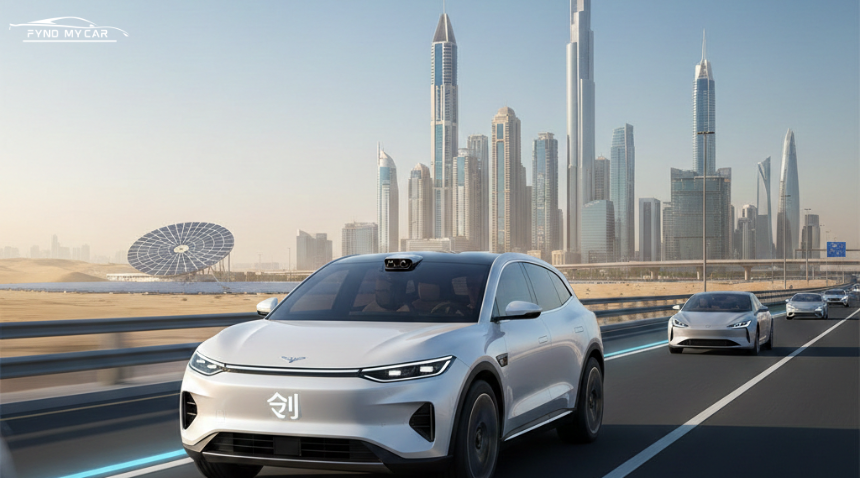
If your priority is the absolute lowest decibel level at 140 km/h, you should look toward the newer entrants in the market mentioned in the latest auto news.
These brands are currently over-engineering their cabins with double-sealed doors to win over customers.
The “Fuel Efficiency” Profile
While the hybrid system is most effective in city traffic, the aerodynamic shapes required to make hybrids efficient also make them very quiet on the highway. The lower the drag, the less the wind “howls” around the A-pillars.
The “Tech-Assisted” Profile
The best crossovers under AED 130,000 now come with Level 2 Autonomous features. This includes:
- Adaptive Cruise Control (ACC): Automatically maintains distance from the car in front, essential for the fluctuating speeds of the E11.
- Lane Keep Assist (LKA): Gently nudges the steering to keep you centered.
- Blind Spot Monitoring: A lifesaver on multi-lane highways where cars can approach rapidly from the rear.
Considerations for AED 130,000 Budget
Finding the best crossovers under AED 130,000 involves a trade-off. You might have to choose between a smaller, more premium crossover with better sound insulation or a larger, mid-size crossover with more space but more utilitarian NVH levels.
For the E11 commuter, the Premium Compact crossover is often the better choice. They feel more solid at high speeds and generally offer the best defense against the fatiguing wind noise of long-distance UAE travel.
The ideal highway crossover under 130k AED must have:
- Acoustic Glass: To battle wind noise.
- Multi-link Rear Suspension: For stability at 140 km/h.
- High-Speed Stability: Aerodynamics that keep the car planted.
- Advanced Driver Assistance (ADAS): To reduce the mental load of the commute.
- Soft-Touch Interior: To dampen cabin echoes.
By focusing on NVH and high-speed mechanical refinement, you can find a crossover that turns a grueling commute into a moment of zen.
FAQs
1. Why is NVH (Noise, Vibration, and Harshness) so important for UAE highway driving?
In the UAE, highway speeds are higher than in many other parts of the world (up to 140 km/h). At these speeds, wind and road noise increase significantly. A vehicle with good NVH suppression ensures a calmer, safer, and more comfortable long-distance commute.
2. Can I find a crossover with adaptive cruise control for under AED 130,000?
Yes. new brands and the competitive nature of the latest auto news cycles, many mid-trim and top-trim crossovers in the sub-130k category now include Adaptive Cruise Control as a standard feature. This is highly recommended for the E11 commute to manage traffic flow efficiently.
3. Does engine size matter for high-speed highway commuting?
While a larger engine often feels more relaxed, modern small-displacement turbocharged engines are very capable. The key factor is the transmission.
4. How do tires affect the wind and road noise on the E11?
Tires are the primary source of road noise. Crossovers with 17-inch or 18-inch wheels usually have more tire sidewall, which absorbs more sound than 19-inch or 20-inch low-profile wheels.
5. Is a hybrid crossover worth it for someone who only drives on the highway?
Hybrid crossovers are exceptionally quiet at low speeds and in stop-and-go traffic. On the highway, the benefit is slightly less pronounced, but they still offer excellent fuel economy.