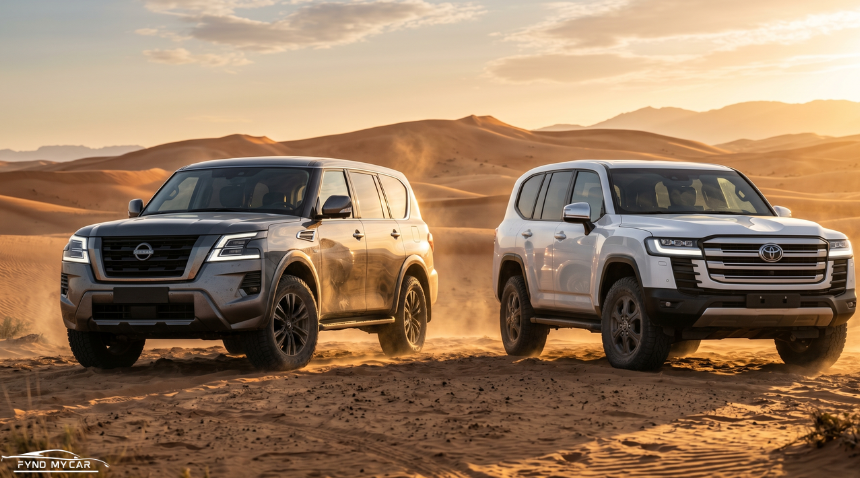
The 2026 full-size SUV segment is defined by forced-induction architectures, pitting the Nissan Patrol Y63’s 425 HP 3.5L twin-turbo V6 against the Toyota Land Cruiser 300’s 409 HP V6. This shift from naturally aspirated V8s to turbocharged platforms reflects a clear focus on output efficiency, torque delivery, and performance consistency across UAE driving conditions.
In this comparison of Nissan Patrol Y63 vs Land Cruiser 300, the focus moves beyond legacy and into measurable performance, drivetrain behavior, and real-world usability to determine the best full-size SUV UAE 2026.
Engine, Power & Performance: Petrol Power vs Diesel Torque
The transition to twin-turbo V6 engines defines this segment in 2026, but execution differs significantly.The Nissan Patrol Y63 is equipped with a 3.5L twin-turbo petrol engine delivering 425 HP and 700 Nm of torque. The higher output translates into stronger acceleration and more immediate throttle response, particularly noticeable during highway driving and high-speed overtaking.
The Toyota Land Cruiser 300 uses a twin-turbo V6 platform producing 409 HP and 650 Nm of torque (petrol). While slightly lower in peak output, the focus is on controlled torque delivery, which improves traction and stability in low-speed and off-road conditions. The 10-speed automatic transmission further refines power distribution.
Performance in UAE Conditions:
- Highway cruising: Patrol Y63 delivers higher top-end performance
- Urban driving: Patrol maintains quicker response characteristics
- Desert driving: Land Cruiser 300 offers more consistent torque control
Size, Road Presence & Interior Comfort
The Nissan Patrol Y63 extends its wheelbase, increasing total cabin volume to accommodate a true 8-seater configuration.This increase in size directly translates into improved second- and third-row usability, with measurable gains in legroom and headroom.
The Toyota Land Cruiser 300, while slightly more compact, prioritizes structural refinement and cabin insulation. Its interior layout emphasizes driver ergonomics and material consistency, particularly in higher trims where soft-touch surfaces and simplified control layouts dominate.
Interior Experience Comparison:
- Patrol: Higher cabin volume, optimized for passenger capacity
- Land Cruiser: Refined layout with tighter driver-centric ergonomics
In UAE summer conditions (~45°C), cabin cooling performance becomes a critical factor. For full-size SUVs, effective HVAC systems must achieve rapid pull-down within approximately 3–5 minutes while maintaining consistent airflow across all three rows. Both models integrate multi-zone climate control systems, but cooling efficiency in large 7–8 seater cabins depends on compressor capacity, rear vent distribution, and airflow volume rather than just insulation.
Off-Road Capability: Desert Performance Analysis
Both vehicles feature full-time 4WD systems, terrain management modes, and advanced traction control systems. However, their engineering philosophies differ significantly. The Nissan Patrol Y63 utilizes an adaptive air suspension system designed for variable ride height and on-road comfort optimization. However, in sustained high-temperature desert environments (≈45°C), pneumatic suspension components such as air bladders and compressors are more susceptible to thermal stress, pressure fluctuation, and long-term durability constraints under repeated high-speed compression cycles.
As a result, traditional coil spring and hydraulic damper setups remain the preferred mechanical configuration for extreme dune bashing reliability in UAE conditions.
The Toyota Land Cruiser 300 retains a coil-spring suspension system combined with adaptive dampers, Crawl Control, and Multi-Terrain Select. This setup prioritizes mechanical durability, predictable articulation, and controlled torque distribution.
Terrain Performance:
- Sand dunes: Patrol favors speed and dynamic movement
- Rocky terrain: Land Cruiser prioritizes control and stability
- Extended off-road use: Land Cruiser maintains consistent system reliability
Technology, Features & Ownership Experience
The Patrol Y63 emphasizes digital integration, offering larger infotainment displays, advanced driver interfaces, and a more technology-forward cabin environment. The Land Cruiser 300 focuses on functional technology, systems designed for durability and ease of use rather than visual complexity. Ownership experience introduces a practical distinction. The Land Cruiser 300 benefits from Toyota’s established service infrastructure, contributing to predictable maintenance cycles and strong resale demand in the UAE market. The Patrol Y63’s increased reliance on electronically controlled systems and newer platform architecture may introduce higher variability in maintenance requirements during early ownership cycles.
Fuel Efficiency & Market Relevance (UAE Context)
Fuel efficiency varies based on engine configuration and market usage.
- Land Cruiser Diesel: Approximately 10–12 km/l, though diesel demand remains limited in the UAE passenger vehicle segment
- Land Cruiser Petrol: Lower efficiency but more aligned with regional usage
- Patrol Y63 Petrol: Prioritizes performance, resulting in comparatively higher fuel consumption
In the UAE, full-size SUV purchases are strongly aligned with Ramadan 2026 sales cycles, where buyers actively benchmark deals across dealerships. This period typically introduces bundled incentives such as extended service contracts, low-interest financing, insurance coverage, and trade-in support. For vehicles like the Nissan Patrol Y63 and Toyota Land Cruiser 300, these Ramadan-linked offers directly influence purchase timing, total ownership cost, and resale positioning in the regional market.
Conclusion
The Nissan Patrol Y63 vs Land Cruiser 300 comparison is defined by output versus control. The Patrol Y63 leads in peak power and acceleration, making it more performance-oriented. The Land Cruiser 300, however, maintains an advantage in controlled torque delivery, system reliability, and long-term ownership consistency.For buyers evaluating the best full-size SUV UAE 2026, the decision depends on usage priority, whether that is higher performance and modern architecture, or proven durability and predictable ownership.