
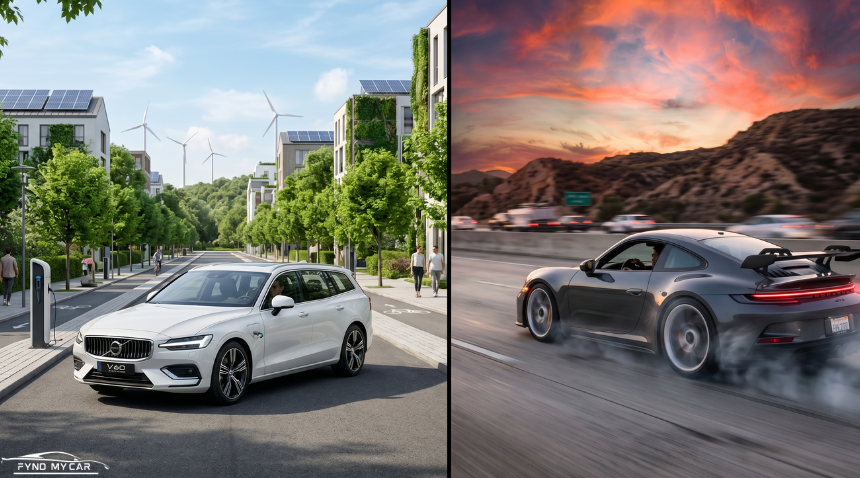
Evaluating powertrains for the UAE requires benchmarking 3.0L V6 petrol thermal tolerances against hybrid battery liquid-cooling parasitic draws at 45°C. It’s the time-tested reliability of a petrol engine or the modern efficiency of a hybrid car in the UAE. Both options offer compelling benefits, but the unique environmental factors and driving landscape of the UAE tilt the balance in subtle yet significant ways.
Understanding these localized effects is critical. The high temperatures and dust-filled air challenge the cooling and filtration systems of both vehicle types, directly impacting fuel economy and long-term durability.
This blog will guide you through how the UAE’s distinct driving conditions can impact the performance and efficiency of both petrol and hybrid vehicles.
How Does Extreme Heat in the UAE Affect Petrol and Hybrid Cars?
The most defining characteristic of the UAE driving environment is the extreme heat, with summer temperatures regularly exceeding 45°C. This level of heat poses distinct challenges for both petrol and hybrid powertrains, primarily revolving around cooling and battery management.
At 45°C ambient temperatures, petrol engines experience a 10-12% drop in air density. This reduces combustion efficiency and lowers real-world fuel economy from 11.5 km/l to 9-10 km/l under AC load. Simultaneously, belt-driven AC compressors impose a 4-6 kW parasitic load on the engine, increasing fuel consumption and thermal stress.
Hybrid vehicles, on the other hand, introduce a secondary challenge. It’s maintaining the optimal temperature for the high-voltage battery pack. Lithium-ion batteries perform best within a narrow temperature range (typically 20°C to 30°C).
Hybrid systems rely on liquid battery cooling to maintain optimal operating temperatures of 20°C-30°C. These systems draw approximately 0.5-1.5 kW continuously, with higher loads under peak UAE summer conditions, reducing overall efficiency by 5-12%.
AC Performance: Hybrid vs. Petrol
Air conditioning is not a luxury in the UAE; it’s a necessity for most of the year. As a result, AC performance and efficiency are top concerns for drivers.
Petrol Cars
The AC compressor is engine-driven, adding a 4-6 kW parasitic load under peak cooling demand. This increases fuel consumption by 15-25% in city driving and 8-12% at highway speeds.
Hybrid Cars
Hybrid systems use electric AC compressors drawing 1-3 kW from the battery. While this enables cooling during engine-off operation, it reduces EV range and can increase engine cycling frequency by up to 30-40% in extreme heat.
Which Is Better for Dubai Traffic: Hybrid or Petrol Cars?
The urban centers of Dubai and Abu Dhabi are synonymous with congestion. The constant cycle of acceleration and braking creates a specific scenario where the differences between hybrid and petrol cars in the UAE are most pronounced.
Hybrid cars in the UAE
In heavy traffic, the hybrid system truly shines due to its regenerative braking capabilities.
- Energy Recovery: Regenerative braking recovers 20-30% of kinetic energy, enabling real-world efficiency of 20-25 km/l in stop-start urban traffic.
- Extended EV Mode: In slow-moving traffic, a hybrid can often operate purely on electric power for short distances, offering zero-emission, silent driving and maximizing fuel savings. This is the primary scenario where UAE drivers will experience the superior mileage of a hybrid.
Petrol cars in the UAE
Conventional petrol cars are least efficient in stop-start conditions.
- Idling Waste: Petrol vehicles consume 0.8-1.2 L/hour during idling and typically achieve only 6-8 km/l in heavy congestion due to zero energy recovery. While “Start/Stop” systems in modern petrol cars mitigate this, they are not as effective as the complete engine shut-off and electric assist of a hybrid.
- Kinetic Energy Loss: All the energy used to accelerate the vehicle is completely wasted as heat through traditional friction brakes when the car slows down.
How Do Dust and Sand in the UAE Affect Car Performance and Maintenance?
The fine, omnipresent sand and dust of the UAE environment pose a shared challenge to all vehicles, demanding diligent maintenance.
Filtration and Components
- Air Filters: Dust accumulation can reduce airflow through air filters by up to 15%, directly impacting combustion efficiency. In UAE conditions, replacement intervals typically reduce from 15,000 km to 5,000-8,000 km.
- Cooling Systems: Dust can clog radiators and condensers, reducing the efficiency of the cooling system, which, as established, is critical in high temperatures.
Hybrid Specific Maintenance
While general maintenance is similar, hybrids have the added complexity of their high-voltage systems.
- Battery Lifespan: While modern hybrid batteries are durable, the cumulative effect of constant heat stress over many years can shorten their ultimate lifespan. However, warranty periods in the UAE are typically generous (often 8-10 years), covering the costliest component.
- Brake Wear: Due to regenerative braking, hybrid vehicles use their traditional friction brakes less frequently. This often results in significantly longer brake pad and rotor life compared to petrol cars in the UAE, representing a long-term cost saving.
Is Buying a Hybrid Car Worth It in the UAE Compared to Petrol?
Ultimately, the choice often comes down to the total cost of ownership. You have to make sure you weigh the higher upfront cost against potential long-term fuel savings.
Initial Investment
Hybrid cars in the UAE typically carry a higher initial purchase price than their petrol counterparts due to the technology and components.
Long-Term Savings
Assuming 20,000 km/year, a petrol vehicle delivering 9.5 km/l versus a hybrid at 24 km/l can yield significant annual fuel savings. With a hybrid price premium of AED 8,000-15,000, the typical payback period is 2-4 years. Given the relatively stable, moderate fuel prices in the UAE compared to global standards, the payback period for a hybrid’s higher purchase price can be longer.
Final Thoughts
In UAE conditions, the hybrid vs petrol decision is governed by thermal efficiency losses, AC load, and traffic patterns. It requires a pragmatic assessment of individual driving habits, local environmental challenges, and financial priorities.
Ultimately, the optimal vehicle for a UAE resident maximizes efficiency where it matters most. The hybrid thrives in congested city grids by reclaiming lost kinetic energy, while the petrol engine maintains reliable and consistent performance. Your choice of petrol or hybrid cars in the UAE depends on your typical commute’s demands and your long-term financial goals.
FAQs
Is the battery life of a hybrid car significantly reduced by the UAE’s heat?
Modern hybrid batteries are engineered to withstand high temperatures and are equipped with sophisticated active cooling systems.
Do petrol cars require special maintenance in the dusty UAE climate?
Yes, all vehicles in the UAE, including petrol cars, require accelerated maintenance schedules compared to milder climates.
How much fuel can one save with a hybrid car in Dubai traffic?
In dense Dubai traffic, hybrids typically achieve 20-25 km/l compared to 6-8 km/l for petrol vehicles, delivering up to 3-4 times higher efficiency.
Is it true that hybrid cars have lower maintenance costs due to less brake wear?
The regenerative braking feature in hybrids extends brake pad life, often lowering long-term maintenance costs.
Are petrol cars better for long-distance highway driving in the UAE?
Yes, generally, petrol cars are slightly better for constant high-speed highway cruising, where the hybrid’s battery cannot contribute significant assistance.