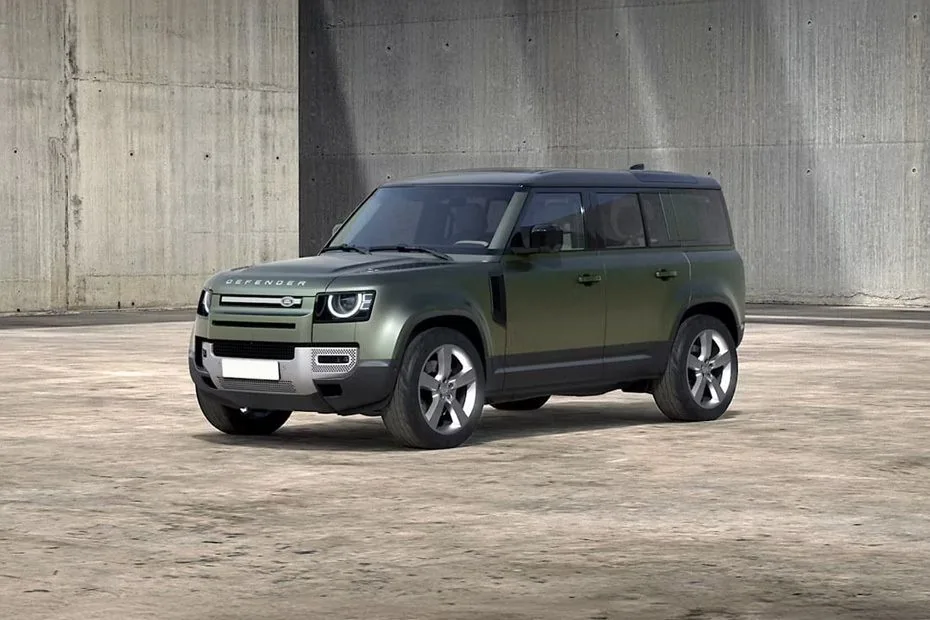
Land Rover DEFENDER 110

UAE FyndmycarLand Rover DEFENDER 110

N/A

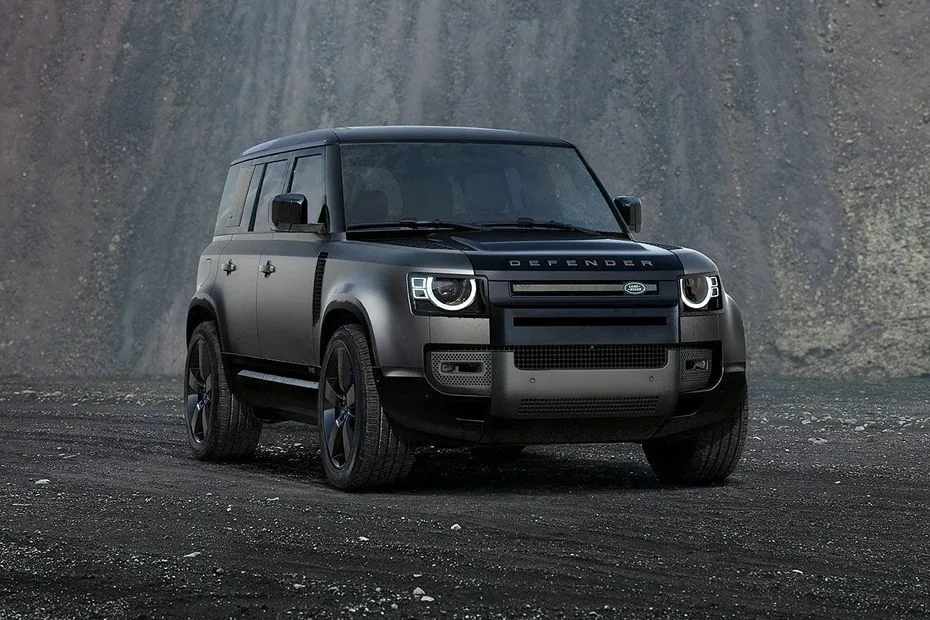
The 2026 Land Rover Defender 110 is available in the UAE with a starting price of AED 288,315 for the S P300 base model. The price range extends to AED 867,610 for the top-tier Octa Edition One P635. A total of 16 variants are offered for the Land Rover Defender 110 2026. These prices are consistent throughout the UAE, covering major cities like Dubai, Abu Dhabi, and Sharjah. It’s important to note that the final on-road cost might differ slightly due to factors such as insurance, registration fees, and any additional accessories.
Read more

Land Rover DEFENDER 110

AED 288,315 - 867,610

Body Type

Crossover

Fuel Type

Petrol, Hybrid

Transmission

Automatic

Mileage

N/A

Land Rover DEFENDER 110 Key Specifications

Engine cc

4395

Max Torque

750Nm@1800-5855rpm

No of Airbags

2

BootSpace

N/A

Ground Clearance

N/A

Fuel Tank Capacity

90 L

Seating Capacity

5 seats

Drive Type

AWD

Latest Updates on Land Rover DEFENDER 110

The Land Rover Defender 110 V8 P525 is now available in the UAE, starting at AED 505,050. The 5.0L V8 produces 525 hp, comes with an automatic transmission and seating for five.
March 1, 2026
Defender 110 receives minor updates for 2026 with enhanced Pivi Pro infotainment and improved air suspension. Off‑road capability remains class‑leading.
February 15, 2026
Land Rover UAE launches Defender 110 Octa special edition with 626 hp twin‑turbo V8. Priced around AED 759,990, it's the most powerful Defender yet.
January 20, 2026

What's New on Land Rover DEFENDER 110?

Introduction

  • The UAE-specified 2026 Land Rover Defender 110 is one of the most calculated developments in the high-end SUV segment. It is not a watered-down crossover that tries to pass as rough and a utility off-roader that begs to be clothed in leather. Rather, it sits at a very well-considered middle ground, with real-world all-terrain capabilities and digital prowess, optional high-output performance, and daily drivability that fits the lifestyles of the Gulf region. In a market where highway stability, desert performance, towing strength, and executive presence have to be present in one vehicle, the Defender 110 does not come across as a compromise but as a rational synthesis. But this synthesis brings about its tension. The Defender becomes heavier, more complex, and far more expensive as it integrates with more power, more luxurious and more technologies, the less utilitarian it has become. What comes out is a car that broadens its capability in all measurable ways but one that demands buyers to accept its high-end positioning.
  • Interior Key Highlights The Defender 110 has a unique definition of premiumness on the inside. The dashboard is horizontally stratified and physically fixed by a structural cross-car beam that is strategically revealed in a number of trims. This design sends the message of engineering transparency, a reminder that the car under the leather and digital displays is still a machine. Depending on the specification, the material used can be a tougher rubberized surface and hard-wearing textile or Windsor leather upholstery and open-pore wood veneers. Even with a higher trim, the cabin is not frail. Switchgear is heavy, and surfaces are ready to take sand, gear, and the long-term. This proportion between opulence and sturdiness seems correct in the UAE, where desert trips are not a luxurious element of the lifestyle but an actual weekend activity. The 13.1-inch touchscreen with Pivi Pro infotainment software is in the center of the dashboard and fits perfectly in. The Defender balances digital control and physical inputs, unlike some competitors that hide important controls in layered menus. The interface is logical and reacts to touch, and does not use unnecessary animation. The smartphone integration is wireless and has the capability of updating the system over the air, hence making it remain relevant. It also features keyless entry. The 110 variation of the passenger accommodation focuses on versatility. The vehicle carries five, six, or seven passengers, depending on the setup. The upright cabin design gives high headroom, and the shoulder spacing is wide, which increases comfort in the long-distance. The high seating position enhances better front visibility, which builds the confidence of the driver both in the city and off-road environments. When rear seats are folded, cargo capacity increases considerably to over 2,200 liters, which places the Defender in the company of large SUVs. Nonetheless, the side-hinged rear tailgate, which is a nod to heritage utility, necessitates space awareness in tight parking situations. This design option may not be as convenient as a traditional liftgate in dense urban environments, especially in the underground parking of UAE malls.

Exterior

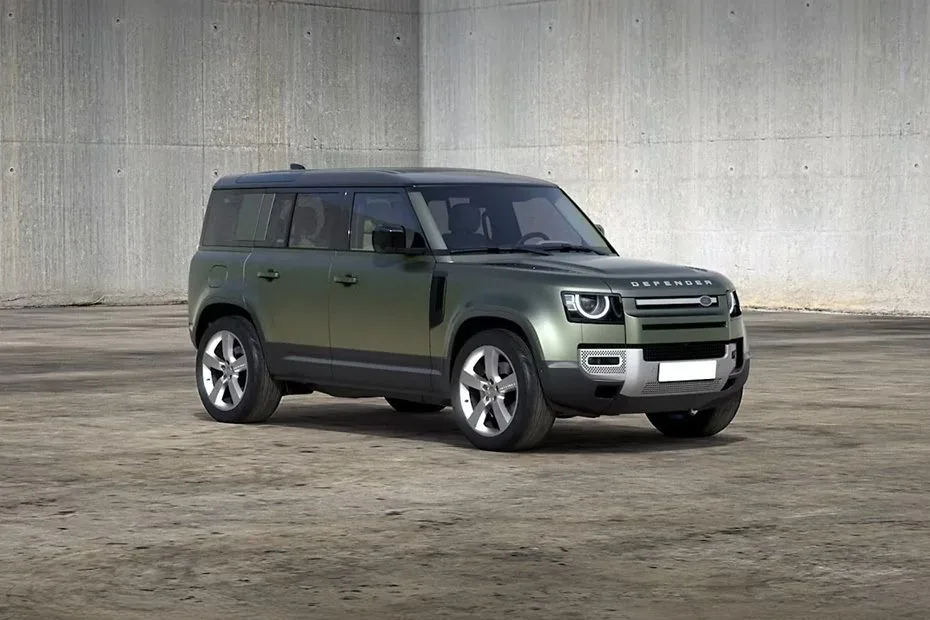
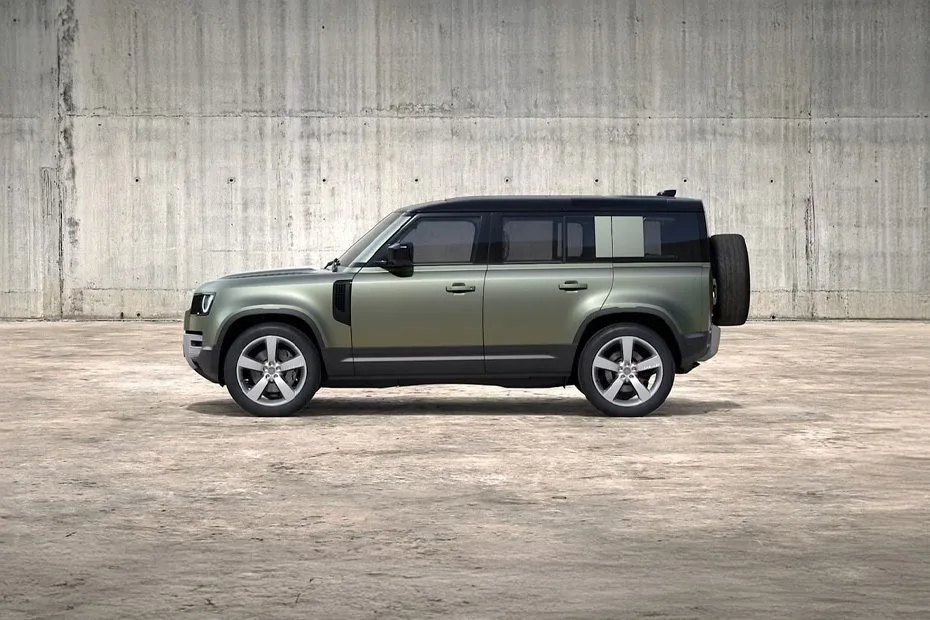
  • The exterior design of the Defender 110 is intended to be architectural. Where a lot of contemporary SUVs use curved sheet metal and flowing shapes to convey sophistication, Defender has upright geometry and apparent structural reasoning. Its position is square, vertical in proportion, and its ornament is also intended to be purposeful. This is not retro design, it is a reinterpretation. The slight allusions to its heritage, alpine roof windows, clamshell hood, and side-hinged rear door are updated with slim panel gaps, flush glazing, and the signatures of LED lighting. You can get the Defender with either 20-inch or 22-inch wheels.
  • The tall greenhouse and the wide shoulders of the Defender provide a strong presence on the road in the UAE setting where visual presence is culturally significant. It appears to be heavy but not bloated. Its off-road competence is supported by the short front overhang, and stance is supported by wide wheel arches and optional big-diameter wheels rather than sportiness. Custom exterior packages enable consumers to customize aesthetic orientation to either urban chic or adventure-preparedness, yet despite being in its most luxurious forms, the Land Rover Defender still retains a sense of ruggedness.
  • Land Rover Defender does not apologize for its upright shape, unlike aerodynamic-oriented SUVs that focus on the coefficient figures. The con is that it predicts trade-off wind resistance when at higher speeds, but the advantage is undisputed identity. There are not many cars in UAE roads as recognizable and as self-confident in terms of their appearance.
  • Mileage Running Cost Key Highlights Defender is still a large, heavy-looking SUV with permanent all-wheel drive, despite its mild-hybrid assistance. These realities are manifested in fuel consumption. Customers who are switching to the smaller crossovers will see the difference at once. Nevertheless, in the high-end SUV segment, the consumption of the Defender is in line with expectations. The mild-hybrid system enhances the smoothness and transient throttle response better than it decreases the overall consumption measures. This difference is significant to consumers who are efficiency-conscious.
  • Defender is still a large, heavy-looking SUV with permanent all-wheel drive, despite its mild-hybrid assistance. These realities are manifested in fuel consumption. Customers who are switching to the smaller crossovers will see the difference at once. Nevertheless, in the high-end SUV segment, the consumption of the Defender is in line with expectations.
  • The mild-hybrid system enhances the smoothness and transient throttle response better than it decreases the overall consumption measures. This difference is significant to consumers who are efficiency-conscious.
  • Ride & Handling Key Highlights The Defender 110 is a vehicle that shows high manners on the highway, despite its rough undercarriage. Air suspension helps to absorb road imperfections, especially when the journey is over a long distance between emirates. Body control is stable, and a certain amount of roll is felt because of the height and weight of the vehicle. There is no excessively sharp steering, but it conveys confidence and not sportiness. Noise in the wind is managed competently, but the upright profile inherently creates more aerodynamic noise than smooth SUVs. Driving in the city demands alertness, particularly in congested urban areas, but parking assistants relieve the pressure considerably. The Defender is not trying to be a sports car. Its active identity is based on stability and authority as opposed to nimbleness. In this regard, it acts as per its design philosophy. Towing Strength and Practical Use Under the UAE specification, towing capacity is about 3,000 kilograms, and the Defender is far ahead of most of its crossover-based rivals. The feature is compatible with boats, caravans, and heavy recreational equipment, making it functional for buyers who lead an active lifestyle. This strength is supplemented by interior flexibility. The fold-flat seating design and considerate storage design enable the vehicle to change to a family transport and equipment carrier with minimal effort. Towing to full capacity, however, consumes a lot of fuel, which is to be expected given the weight and power output.
  • The Defender 110 is a vehicle that shows high manners on the highway, despite its rough undercarriage. Air suspension helps to absorb road imperfections, especially when the journey is over a long distance between emirates. Body control is stable, and a certain amount of roll is felt because of the height and weight of the vehicle. There is no excessively sharp steering, but it conveys confidence and not sportiness.
  • Noise in the wind is managed competently, but the upright profile inherently creates more aerodynamic noise than smooth SUVs. Driving in the city demands alertness, particularly in congested urban areas, but parking assistants relieve the pressure considerably.
  • The Defender is not trying to be a sports car. Its active identity is based on stability and authority as opposed to nimbleness. In this regard, it acts as per its design philosophy.
  • Under the UAE specification, towing capacity is about 3,000 kilograms, and the Defender is far ahead of most of its crossover-based rivals. The feature is compatible with boats, caravans, and heavy recreational equipment, making it functional for buyers who lead an active lifestyle.
  • This strength is supplemented by interior flexibility. The fold-flat seating design and considerate storage design enable the vehicle to change to a family transport and equipment carrier with minimal effort. Towing to full capacity, however, consumes a lot of fuel, which is to be expected given the weight and power output.
  • Engine & Fuel Consumption Key Highlights The UAE variant of the Defender 110 has an unusually broad powertrain range, ranging from the civilized six-cylinder mild-hybrid units through to the extreme V8 performance-based setups. This breadth indicates the efforts of Land Rover to please different buyer types under one model platform. The V8 mild-hybrid six-cylinder engines produce about 525 PS in higher trims, which combines turbocharging with electric assistance to increase responsiveness and smoothness. The acceleration to 100 km/h is achieved within the high five-second range, which is quite impressive considering the weight and aerodynamic shape of the car. There is progressive power delivery, not explosive, with torque-rich flexibility instead of aggressive peaks. This type of character is appropriate to long-haul highway work and crest transitions in the desert, where the use of controlled torque is more useful than sudden throttle spikes. The consumption of fuel is still comparable to that of giant luxury SUVs. The practical mixed driving is usually representative of the heavy curb weight and permanent all-wheel-drive of the Defender. The integration of the mild-hybrid adds more to throttle refinement and low-speed smoothness than to transformative fuel savings. This is, in practice, a car that has been designed to be capable and efficient. On the top of the range is the high-performance OCTA version, which produces as much as 635 PS and 750 Nm using a twin-turbocharged V8. The 0-100 km/h time of 3.9 seconds, which is impressive in a car with legitimate off-road geometry and serious ground clearance. The V8 changes the character of the Defender, providing the sports-SUV acceleration without compromising in terms of structural integrity and desert preparedness. But the consumption of fuel increases in proportion, and the cost of purchase increases tremendously. Performance is the natural follow-up of ownership costs. Land Rover Defender 110 uses a high-tech 8-speed auto transmission with permanent all-wheel-drive and two-speed transfer box with a high and low range. This design is the core of the dual-character ability of the Defender. When driving in a highway the transmission is smooth and unobtrusive, the revs of the engines remain low to provide good cruising speed and yet be able to access torque instantly in overtaking on the UAE motorway. With off-road, the low-range gearing alters the behavior of the vehicle completely as it allows one to fine-tune the throttle on a dune ascent, rock crawling as well as controlled descents. The gear ratios are intelligently spaced in order to balance between acceleration and loading and towing loads and the electronic active differential and torque vectoring by braking improve traction distribution without driver intervention. The Defender is a proactive, not a reactive, AWD system which makes it and its drivetrain mechanically powerful, as opposed to being a soft-road SUV. Off-Road Systems: Engineering Depth Beyond Marketing The validity of the Defender lies not in the styling indicators but in the mechanical architecture. Permanent all-wheel drive, two-speed transfer case, electronic active differential management, adjustable air suspension, and Terrain Response systems are all features that allow off-road capability. These systems release the torque in an intelligent manner and ensure stability of traction in loose sand in desert conditions prevalent in the UAE. Variable ride height increases approach and departure angles, and durable underbody protection reduces terrain impact. The capacity to wade is better than most competitors, which further confirms Defender as a real all-terrain vehicle, as opposed to being a style interpretation of an all-terrain vehicle. But sophistication goes with complexity. The incorporation of sophisticated electronics and adaptive suspension also adds other elements that need long-term maintenance. This can be considered as an unavoidable trade-off of contemporary functionality to buyers who value mechanical simplicity.

Interior

  • The Defender 110 has a unique definition of premiumness on the inside. The dashboard is horizontally stratified and physically fixed by a structural cross-car beam that is strategically revealed in a number of trims. This design sends the message of engineering transparency, a reminder that the car under the leather and digital displays is still a machine.
  • Depending on the specification, the material used can be a tougher rubberized surface and hard-wearing textile or Windsor leather upholstery and open-pore wood veneers. Even with a higher trim, the cabin is not frail. Switchgear is heavy, and surfaces are ready to take sand, gear, and the long-term. This proportion between opulence and sturdiness seems correct in the UAE, where desert trips are not a luxurious element of the lifestyle but an actual weekend activity.
  • The 13.1-inch touchscreen with Pivi Pro infotainment software is in the center of the dashboard and fits perfectly in. The Defender balances digital control and physical inputs, unlike some competitors that hide important controls in layered menus. The interface is logical and reacts to touch, and does not use unnecessary animation. The smartphone integration is wireless and has the capability of updating the system over the air, hence making it remain relevant. It also features keyless entry.
  • The 110 variation of the passenger accommodation focuses on versatility. The vehicle carries five, six, or seven passengers, depending on the setup. The upright cabin design gives high headroom, and the shoulder spacing is wide, which increases comfort in the long-distance. The high seating position enhances better front visibility, which builds the confidence of the driver both in the city and off-road environments. When rear seats are folded, cargo capacity increases considerably to over 2,200 liters, which places the Defender in the company of large SUVs.
  • Nonetheless, the side-hinged rear tailgate, which is a nod to heritage utility, necessitates space awareness in tight parking situations. This design option may not be as convenient as a traditional liftgate in dense urban environments, especially in the underground parking of UAE malls.
  • Safety Key Highlights The Defender 110 comes with a full package of driver-assistance features, such as autonomous emergency braking, lane-keeping systems, adaptive cruise control, blind-spot cameras, and surround-view cameras. The calibration is more towards supportive intervention and not intrusive alerts. Systems exist and work, but usually do not provide too many false positives. It is also equipped with front airbags with a passenger seat occupant detector, tyre pressure monitoring system (TPMS), push start button, and seat belt reminder.

Powertrain

  • The UAE variant of the Defender 110 has an unusually broad powertrain range, ranging from the civilized six-cylinder mild-hybrid units through to the extreme V8 performance-based setups. This breadth indicates the efforts of Land Rover to please different buyer types under one model platform.
  • The V8 mild-hybrid six-cylinder engines produce about 525 PS in higher trims, which combines turbocharging with electric assistance to increase responsiveness and smoothness. The acceleration to 100 km/h is achieved within the high five-second range, which is quite impressive considering the weight and aerodynamic shape of the car. There is progressive power delivery, not explosive, with torque-rich flexibility instead of aggressive peaks. This type of character is appropriate to long-haul highway work and crest transitions in the desert, where the use of controlled torque is more useful than sudden throttle spikes.
  • The consumption of fuel is still comparable to that of giant luxury SUVs. The practical mixed driving is usually representative of the heavy curb weight and permanent all-wheel-drive of the Defender. The integration of the mild-hybrid adds more to throttle refinement and low-speed smoothness than to transformative fuel savings. This is, in practice, a car that has been designed to be capable and efficient.
  • On the top of the range is the high-performance OCTA version, which produces as much as 635 PS and 750 Nm using a twin-turbocharged V8. The 0-100 km/h time of 3.9 seconds, which is impressive in a car with legitimate off-road geometry and serious ground clearance. The V8 changes the character of the Defender, providing the sports-SUV acceleration without compromising in terms of structural integrity and desert preparedness. But the consumption of fuel increases in proportion, and the cost of purchase increases tremendously. Performance is the natural follow-up of ownership costs.
  • Land Rover Defender 110 uses a high-tech 8-speed auto transmission with permanent all-wheel-drive and two-speed transfer box with a high and low range. This design is the core of the dual-character ability of the Defender. When driving in a highway the transmission is smooth and unobtrusive, the revs of the engines remain low to provide good cruising speed and yet be able to access torque instantly in overtaking on the UAE motorway.
  • With off-road, the low-range gearing alters the behavior of the vehicle completely as it allows one to fine-tune the throttle on a dune ascent, rock crawling as well as controlled descents. The gear ratios are intelligently spaced in order to balance between acceleration and loading and towing loads and the electronic active differential and torque vectoring by braking improve traction distribution without driver intervention. The Defender is a proactive, not a reactive, AWD system which makes it and its drivetrain mechanically powerful, as opposed to being a soft-road SUV.
  • The validity of the Defender lies not in the styling indicators but in the mechanical architecture. Permanent all-wheel drive, two-speed transfer case, electronic active differential management, adjustable air suspension, and Terrain Response systems are all features that allow off-road capability.
  • These systems release the torque in an intelligent manner and ensure stability of traction in loose sand in desert conditions prevalent in the UAE. Variable ride height increases approach and departure angles, and durable underbody protection reduces terrain impact. The capacity to wade is better than most competitors, which further confirms Defender as a real all-terrain vehicle, as opposed to being a style interpretation of an all-terrain vehicle.
  • But sophistication goes with complexity. The incorporation of sophisticated electronics and adaptive suspension also adds other elements that need long-term maintenance. This can be considered as an unavoidable trade-off of contemporary functionality to buyers who value mechanical simplicity.
  • Variant Key Highlights Premium positioning is bound to go beyond purchase price. Maintenance, insurance, and fuel expenses are in line with the market segment and the mechanical complexity of the Defender. Nonetheless, good brand equity and regional demand traditionally contribute to good resale values, especially of well-kept specimens. Ownership, thus, is a trade-off between initial investment and retention of value in the long term.
Read More

Land Rover DEFENDER 110 Specifications

  • Engine and Performance
  • Dimensions and Weight
  • Capacity
  • Suspension Brakes and Steering
  • Tyres and Wheels
Drive Train
AWD
Valves Per Cylinder
4
Compression Ratio
9.5
Displacement (CC)
1997 cc
Power
300Hp@5500rpm
Torque
400Nm@1500-4500rpm
Acceleration 0 to 100 Kmph
7.4s
Top Speed
191 Km/h
Max Power
300Hp@5500rpm
Max Torque
400Nm@1500-4500rpm
Length
5018 mm
Width
2008 mm
Height
1967 mm
turning_radius
13.1
Kerb Weight
3105 kg
Seating Capacity
5 seats
Fuel tank Capacity
90 L
Steering Type
Electric
Front Brake Type
Vantilated Disc
Rear Brake Type
Vantilated Disc
Tyre Type
Radial Tubeless

Land Rover DEFENDER 110 Features

  • Comfort and Convenience
  • Locks and Security
  • Seats and Upholstery
  • Safety and Security
  • Instrumentation
  • Entertainment
  • Advanced Features
Remote Engine Start
2.0 L
Front AC
1706
Rear AC
1702
Power Windows
Yes
Climate Control
Yes
Heater
Yes
Power Outlets 12V
Yes
Keyless Entry
Yes
Cruise Control
Yes
Automatic Headlamps
Yes
Wireless Charger
Yes
Central Locking
Yes
Engine Immobilizer
Yes
ISOFIX Child Seat Mounts
Yes
Passenger Airbags
Yes
Driver Airbags
Yes
ABS
Yes
Electronic Brakeforce Distribution
Yes
Day & Night Rear View Mirror
Yes
Parking Sensors
Rear
Traction Control
Yes
No. of Airbags
2
Low Fuel Warning
Yes
Clock
Yes
Seat Belt Warning
Yes
Door Ajar Warning
Yes
USB & Auxiliary Input
Yes
Touch Screen
Yes
GPS Navigation
Yes
Bluetooth Connectivity
Yes
Speakers Front
Yes
Speakers Rear
Yes
Wireless Charger
Yes
Android Auto
Yes
Apple Carplay
Yes
anti_theft_alarm
Yes
Leather Seats
Yes
Leather Steering Wheel
Yes
Digital Odometer
Yes

Feedback

Your Feedback Matters!