Hyundai Santa Fe

UAE FyndmycarHyundai Santa Fe

N/A

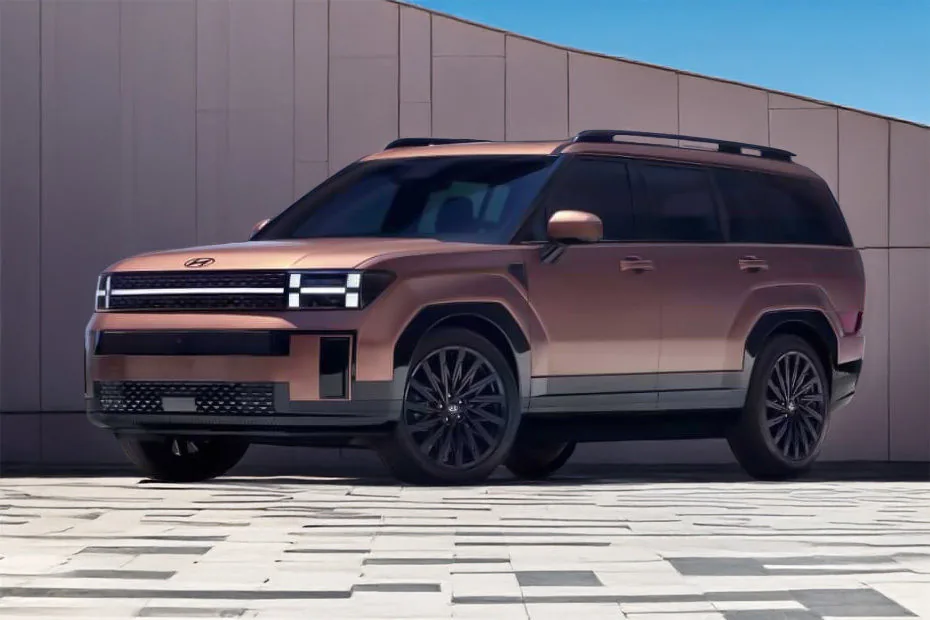
The 2026 Hyundai Santa Fe is available in the UAE with a starting price of AED 128,100 for the MX5c Smart Plus base model, while the top-tier Comfort Plus Hev variant is priced up to AED 202,125. This vehicle is offered in 5 different versions, with the MX5c Smart Plus being the entry-level and the Comfort Plus Hev as the premium option. These prices are consistent across all major cities in the UAE, including Dubai, Abu Dhabi, and Sharjah. Please note that the final on-road price may vary slightly due to factors like insurance, registration, and additional accessories.
Read more

Hyundai Santa Fe

AED 128,100 - 202,125

Body Type

Crossover

Fuel Type

Petrol, Hybrid

Transmission

Automatic

Mileage

N/A

Hyundai Santa Fe Key Specifications

Engine cc

1598

Max Torque

366Nm@1000–4100rpm

No of Airbags

2

BootSpace

413 L

Ground Clearance

N/A

Fuel Tank Capacity

67 L

Seating Capacity

7

Drive Type

FWD

Latest Updates on Hyundai Santa Fe

Hyundai Santa Fe Hybrid tops the range, with a listed price of AED 192,500, sitting above the 2.0-litre turbocharged versions for buyers prioritising economy
May 6, 2026
The Santa Fe was part of Hyundai's Ramadan 2026 campaign and is equipped with three-row seating, a large infotainment display, a digital instrument cluster, multiple drive modes and advanced safety systems.
February 20, 2026
The current, fully redesigned Santa Fe reached showrooms with a boxier, upright look and petrol and hybrid engine options, a major generational change for the midsize family SUV.
March 12, 2025

What's New on Hyundai Santa Fe?

Introduction

  • The 2025 Hyundai Santa Fe is a turning point in the midsize SUV market. Coming with a violent cubic design language that reminds one of high-end Land Rover looks, a turbocharged power train offering that starts with conventional gasoline and extends to full hybrid, and a price that is lower than luxury competitors by at least one-tenth, this Korean-designed three-row crossover disputes the notion that luxury cabin furnishings need to be accompanied by luxury pricing.
  • The seven-seat versatility, with a wheelbase exceeding 2,815 mm the advanced infotainment architecture featuring a seamless smartphone interface and adaptive driving features and a safety architecture standard across all trims, including forward-collision avoidance, lane-following assistance, and blind-spot monitoring. However, behind this strong package lies a basic contradiction: Hyundai has created a car that does remarkably well in all but one measure (typically affecting buying decisions) - the real-world fuel economy.
  • Pros & Cons Things we like in Santa Fe Enhanced Dynamics Firm control at high speeds Improved Fuel Economy Things we don't like in Santa Fe Short headroom for third row Fuzzy steering wheel Engine lacks high speed responsiveness View More

Exterior

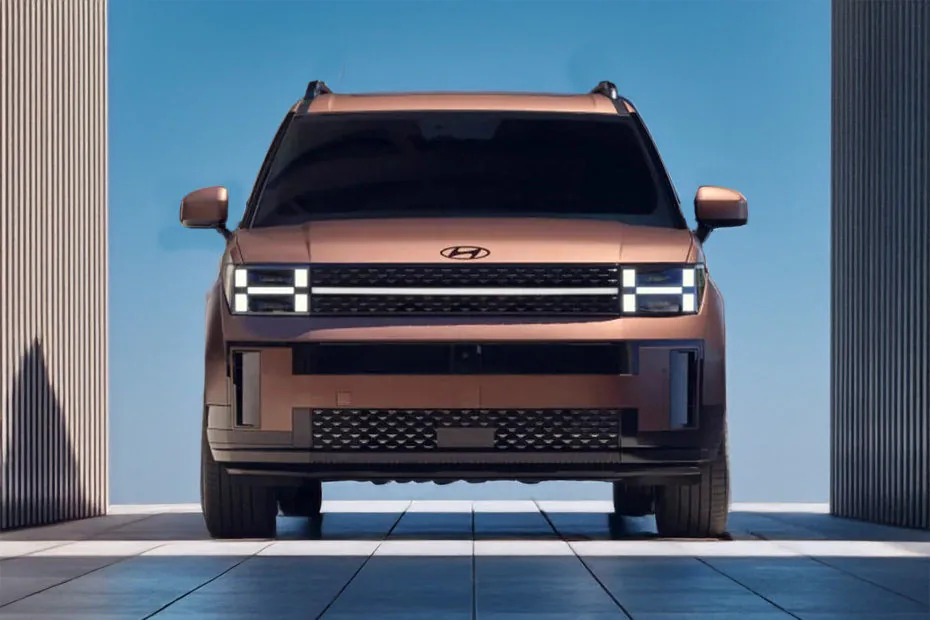
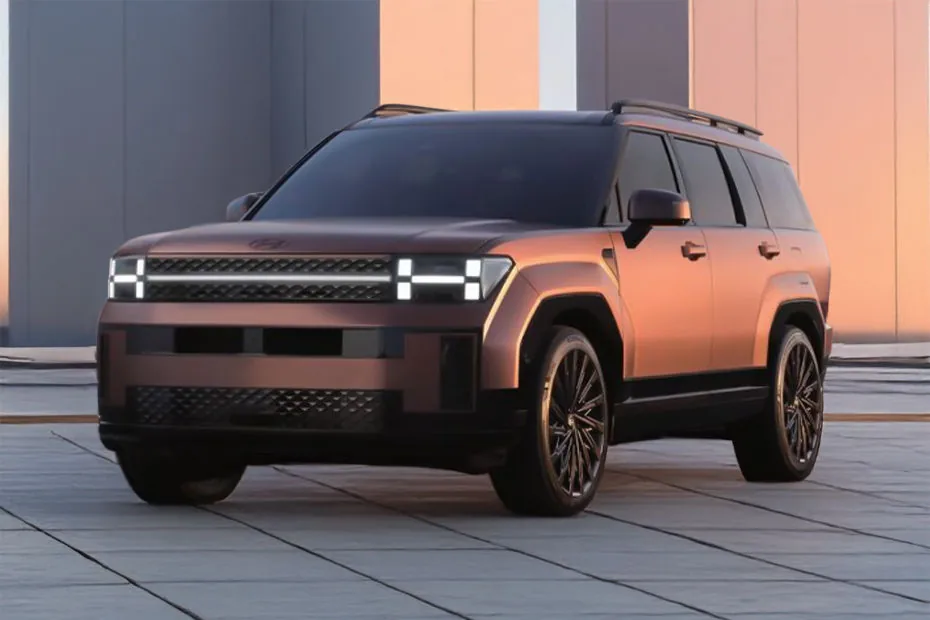
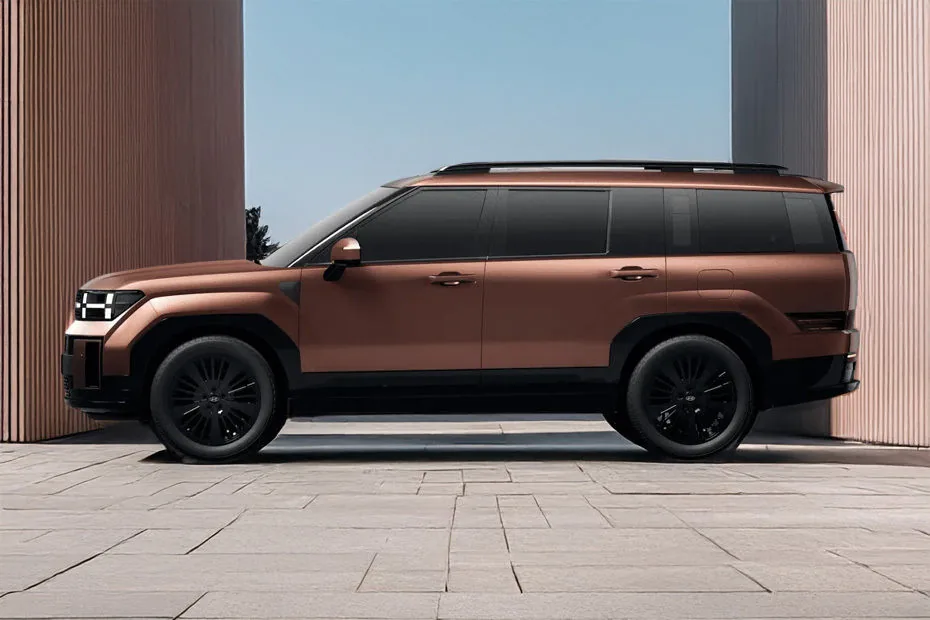
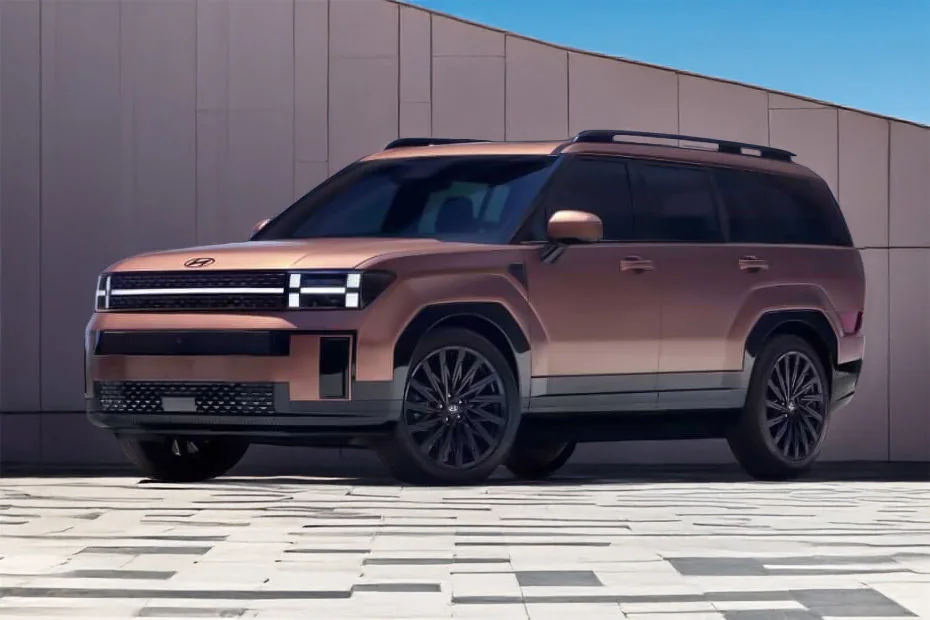
  • The exterior of the Hyundai Santa Fe is a sharp departure from the design vocabulary used by Hyundai in the past. The low, horizontal hood (flat in comparison to conventional SUV geometry) offers real forward visibility benefit over boxier rivals, and the 20-inch alloy wheel standard on most models and roof rails are indicative of design deliberateness, not cost reduction. The 4,830 mm length, 1,900 mm width, and 1,780 mm height (including roof rails) dimensions create the visual presence that is comparable to those of vehicles priced between 20,000 and 30,000 dollars higher. The design team consciously borrowed the visual language of the Land Rover Discovery, especially the door shape and upper body musculature, to form a unified narrative of the idea of rugged elegance.
  • Mileage Running Cost Key Highlights This is the main engineering contradiction of the Santa Fe. EPA estimates of 36 mpg combined (hybrid, all-wheel drive) are best-case scenarios in controlled federal laboratory conditions, essentially not representative of real ownership. The priorities of optimization of the hybrid system at Hyundai are clear: the urban stop-and-go driving (5.1 liters/100 km or 46.1 mpg US) proves the dominance of the electric motor, the motorway driving (140 km/h highway speeds) at 100 km/h (100 miles per hour) proves the dominance of the turbo four-cylinder, leaving the electric system in an intermediate functional position. The conventional Hyundai Santa Fe with turbocharging achieves 20-24 mpg in similar drive cycles- i.e. the real-life benefit of the hybrid is reduced to 3-5 mpg in mixed driving, which is hardly worth paying the extra 1000+ to buy it. The 17.7-gallon fuel tank and 637-mile range (front-wheel drive) give the car sufficient highway range; the difference between the projected and actual efficiency only adds to the frustration of data-conscious consumers used to the honesty of fuel consumption.
  • This is the main engineering contradiction of the Santa Fe. EPA estimates of 36 mpg combined (hybrid, all-wheel drive) are best-case scenarios in controlled federal laboratory conditions, essentially not representative of real ownership.
  • The priorities of optimization of the hybrid system at Hyundai are clear: the urban stop-and-go driving (5.1 liters/100 km or 46.1 mpg US) proves the dominance of the electric motor, the motorway driving (140 km/h highway speeds) at 100 km/h (100 miles per hour) proves the dominance of the turbo four-cylinder, leaving the electric system in an intermediate functional position.
  • The conventional Hyundai Santa Fe with turbocharging achieves 20-24 mpg in similar drive cycles- i.e. the real-life benefit of the hybrid is reduced to 3-5 mpg in mixed driving, which is hardly worth paying the extra 1000+ to buy it.
  • The 17.7-gallon fuel tank and 637-mile range (front-wheel drive) give the car sufficient highway range; the difference between the projected and actual efficiency only adds to the frustration of data-conscious consumers used to the honesty of fuel consumption.
  • Ride & Handling Key Highlights Driving Dynamics: Effective, Not Refined The Santa Fe provides good on-road behaviour, inclined to passenger comfort, and not chassis virtuosity. The ergonomics of town-driving are really handy: the flat hood and sitting position (1,436 mm hip point) give the car great forward and downward visibility. The 360-degree parking sensors of the surround-view cameras (standard on all trims) and the new digital rear-view mirror (mid-trim) provide a technological safety net that is useful in offsetting the 3.5+ ton curb weight of the vehicle. Suspension tuning Independent double-wishbone front, multi-link rear, is based on comfort in ride, not cornering. Independent testing shows chassis behavior similar to that of Land Rover Discovery: smooth rocking action over greater vertical action, smooth brake modulation (they do not have a hard initial bite like regen-heavy hybrid rivals), and general composure that is more suited to long-distance cruising than mountain canyon carving. Nonetheless, the default behavior is frustrating when integrated safety systems are used. Attention-assist monitoring (detecting eye-gaze of the driver out of the road) is aggressive, and alerts are given after several seconds of looking at the instrument panel. The lane-departure warning and speed-limit vigilance systems are activated by default every time the car is started, and must be turned off by navigating a submenu. This is inconvenient and happens every time the car is started. This bad human-factors design causes cumulative frustration for drivers.
  • The Santa Fe provides good on-road behaviour, inclined to passenger comfort, and not chassis virtuosity. The ergonomics of town-driving are really handy: the flat hood and sitting position (1,436 mm hip point) give the car great forward and downward visibility. The 360-degree parking sensors of the surround-view cameras (standard on all trims) and the new digital rear-view mirror (mid-trim) provide a technological safety net that is useful in offsetting the 3.5+ ton curb weight of the vehicle.
  • Suspension tuning Independent double-wishbone front, multi-link rear, is based on comfort in ride, not cornering. Independent testing shows chassis behavior similar to that of Land Rover Discovery: smooth rocking action over greater vertical action, smooth brake modulation (they do not have a hard initial bite like regen-heavy hybrid rivals), and general composure that is more suited to long-distance cruising than mountain canyon carving.
  • Nonetheless, the default behavior is frustrating when integrated safety systems are used. Attention-assist monitoring (detecting eye-gaze of the driver out of the road) is aggressive, and alerts are given after several seconds of looking at the instrument panel. The lane-departure warning and speed-limit vigilance systems are activated by default every time the car is started, and must be turned off by navigating a submenu. This is inconvenient and happens every time the car is started. This bad human-factors design causes cumulative frustration for drivers.
  • Engine & Fuel Consumption Key Highlights Hyundai provides the Santa Fe in four different powerplant architectures, each of which signifies various priorities of buyers. The traditional 2.5-liter turbocharged inline-four is the performance flagship with 194 horsepower and 250 Nm torque at 4,000 rpm. Combined with an eight-speed dual-clutch automatic transmission, this engine provides 0-60 mph in 6.3 seconds, which is good but not exciting performance, but it is faster than the previous generation objectively. The test fuel economy shows 20 mpg city/28 highway with all-wheel drive, or 21 city/29 highway with front-wheel drive. This translates to actual combined numbers of about 23-24 mpg- good in a 4,830 mm three-row car.​ The volume strategic bet is the hybrid powertrain, which is a turbocharged 1.6-liter four-cylinder combined with an electric motor generator with 235 combined horsepower and 370 Nm of torque. EPA estimates stand at 35 mpg city/34 highway with all-wheel drive (36/35 with front-wheel drive). The practicality of Hyundai is reflected in test results: in a one-week test, one extensive independent test reached 37 mpg, and at an average speed of 22 km/h (13.5 mph), city driving gave 5.1 liters per 100 kilometers (46.1 mpg US equivalent). However, wider testing shows the unpleasant truth: several independent automotive experts recorded a real combined fleet economy of 26-29 mpg, a 6-10 mpg difference with EPA figures. This deficiency, which is usually explained by the fact that the hybrid system is not optimized to suit North American driving habits and violent EPA test cycles, compromises the main value proposition of hybrid choice. ​ The acceleration feature indicates performance compromise: the hybrid takes 7.8 seconds to reach 0-60 mph, compared to 6.3 seconds in the turbo gasoline model. The gap is underlined by low-speed rolling acceleration (5-60 mph) 9.1 seconds (hybrid) and 6.7 seconds (turbocharged). The behavioural smoothness of the conventional transmission with light throttle body and parking moves is arguably more important than raw acceleration numbers, especially when it comes to family-duty driving, but enthusiast drivers view throttle response as sluggish compared to competitive offerings.

Interior

  • The interior narrates a similar tale. The technologically modern environment is achieved by dual 12.3-inch displays (driver supervision instrument cluster and center infotainment screen). Climate control buttons are not part of the primary infotainment (a difference between this car and the integrated system of BMW), and dual wireless charging pads with display charge-status indicators.
  • Nevertheless, the material development shows economy concessions: door cards and lower dashboard surfaces use harder-touch plastics that are not in line with the promised high-end positioning. The shift-by-wire gear lever, no longer placed on the floor but on the steering column, is less comfortably placed than a conventional lever, but packs better inside the car and allows reverse/park changes to be made by thumb pressing instead of a finger press, which is ergonomically awkward to the first-experience driver.
  • The three-row cabin is intelligently designed for space efficiency. Middle-row seats are reclining and sliding separately, providing 6-7 passenger capacity and third-row seating that can be used by children or by occasional adult passengers on shorter journeys. The interior width of 1,900 mm is wide enough to seat three adults in the middle row with sufficient shoulder clearance; the headroom and knee room are also spacious up to the second row. With all seats in place, boot capacity is 413 liters folding middle row provides 1098 liters full third-row fold provides 2046 liters- a convenient family duty cycle storage architecture. It is worth mentioning that Hyundai also includes 18 cup holders in the cabin (another 4-5 than its category competitors), seat back document folders, under-seat sliding storage, and two glove boxes, one with UV sterilization capability on higher-end models.
  • The number of cup holders (eight), sliding tray compartments, door-mounted sun shades, and two glove boxes (one of which has UV sterilization) is far beyond most competitive features. The boot area slides under the tonneau cover with no pronounced lip-loading heavy objects to be loaded without the risk of damaging the curb. The interior panels are removable, and the cubbies are modular, allowing different cargo setups- a practical way of family-friendly utility.
  • ​ However, towing capacity is a useful point of distinction in the negative: Hyundai claims a maximum 1.1-ton towing range throughout the Santa Fe range, which is far below Nissan X-Trail (2.0 tons), Škoda Kodiak (2.4 tons), and Land Rover Discovery (3.5 tons). This limitation effectively rules out the Santa Fe in families that need caravan /horse-trailer capability, no matter how well it performs in other respects. Absence of built-in rear-camera washer means that it has to be washed manually after bad weather- a quality of life loss to cars that are priced between Audi Q7 models.
  • Safety Key Highlights The SmartSense package of Hyundai includes forward-collision avoidance (FCA), lane-departure warning (LDW), lane-following assist 2 (LFA 2), parking collision avoidance (PCA-Reverse), and blind-spot collision avoidance, which is available in all models. The quality of the implementation seems to be sufficient: collision systems are shown to be sensitive enough to avoid nuisance notifications and to be responsive enough, adaptive cruise is shown to be smooth, and camera-based parking assistance offers a useful spatial awareness. Active/passive safety integration is complete with comprehensive airbag architecture (front, side, curtain, center) and electronic stability control. ​ The said attention-assist aggressiveness, however, implies that software calibration is skewed to false positive alerts as opposed to smart context interpretation. Contemporary SUV competitors (Toyota Highlander, Lexus RX) adopt the same functionality with better restraint and learning algorithms. The strategy used by Hyundai to increase the number of warnings with every start-up that needs to be deactivated is a way of losing trust in the driver instead of improving the safety culture.

Powertrain

  • Hyundai provides the Santa Fe in four different powerplant architectures, each of which signifies various priorities of buyers.
  • The traditional 2.5-liter turbocharged inline-four is the performance flagship with 194 horsepower and 250 Nm torque at 4,000 rpm. Combined with an eight-speed dual-clutch automatic transmission, this engine provides 0-60 mph in 6.3 seconds, which is good but not exciting performance, but it is faster than the previous generation objectively. The test fuel economy shows 20 mpg city/28 highway with all-wheel drive, or 21 city/29 highway with front-wheel drive. This translates to actual combined numbers of about 23-24 mpg- good in a 4,830 mm three-row car.​
  • The volume strategic bet is the hybrid powertrain, which is a turbocharged 1.6-liter four-cylinder combined with an electric motor generator with 235 combined horsepower and 370 Nm of torque. EPA estimates stand at 35 mpg city/34 highway with all-wheel drive (36/35 with front-wheel drive).
  • The practicality of Hyundai is reflected in test results: in a one-week test, one extensive independent test reached 37 mpg, and at an average speed of 22 km/h (13.5 mph), city driving gave 5.1 liters per 100 kilometers (46.1 mpg US equivalent).
  • However, wider testing shows the unpleasant truth: several independent automotive experts recorded a real combined fleet economy of 26-29 mpg, a 6-10 mpg difference with EPA figures. This deficiency, which is usually explained by the fact that the hybrid system is not optimized to suit North American driving habits and violent EPA test cycles, compromises the main value proposition of hybrid choice.
  • ​ The acceleration feature indicates performance compromise: the hybrid takes 7.8 seconds to reach 0-60 mph, compared to 6.3 seconds in the turbo gasoline model. The gap is underlined by low-speed rolling acceleration (5-60 mph) 9.1 seconds (hybrid) and 6.7 seconds (turbocharged). The behavioural smoothness of the conventional transmission with light throttle body and parking moves is arguably more important than raw acceleration numbers, especially when it comes to family-duty driving, but enthusiast drivers view throttle response as sluggish compared to competitive offerings.
  • Features Key Highlights The dual-screen design, 12.3-inch driver display, and about 12-inch center touchscreen bring cohesion to the modern dashboard. Graphics rendering is crisp and better than most 2024 competitors; menu navigation is logically organized; physical shortcut buttons flanking the main display provide tactile access to frequently-accessed functions (camera, climate preset) without tedious menu diving. The wireless smartphone projection (Apple CarPlay/Android Auto) feature comes as standard, and the Lightning/USB-C adapter charge cycle scourge is removed. The electrical infrastructure is thoughtfully planned with eight USB-C ports spread all over the cabin (in addition to the 12-volt outlets).​ The wireless charging feature, though, shows engineering oversight: charging activates only until cabin doors are completely closed, an unintuitive feature that does not allow one to confirm that they are actively charging when making short stops or handoff situations. Functionality, of course, is perfect when the driver gets used to the power-door-close need. Adaptive cruise technology with navigation-based functionality, which automatically slows down when turn-in points are near, improves the comfort of the motorway, but is sometimes overly aggressive in estimating the braking force needed on a low-grade curve, resulting in unnecessary braking interventions.
Read More

Hyundai Santa Fe Specifications

  • Engine and Performance
  • Dimensions and Weight
  • Capacity
  • Suspension Brakes and Steering
  • Tyres and Wheels
No. of gears
8 Speed
Drive Train
FWD
Displacement (CC)
1975 cc
Power
243hp@6000rpm
Torque
353Nm@1500-4500rpm
Top Speed
210 Km/h
Acceleration 0 to 100 Kmph
9s
Max Power
243hp@6000rpm
Max Torque
353Nm@1500-4500rpm
Length
4830 mm
Width
1900 mm
Height
1770 mm
Seating Capacity
7 seats
Fuel tank Capacity
67 L
Boot Space
413 L
Steering Type
Electric
Front Brake Type
Ventilated Disc
Rear Brake Type
Disc
Front Tyre Size
235/60 R18
Rear Tyre Size
235/60 R18
Tyre Type
Radial Tubeless

Hyundai Santa Fe Features

  • Comfort and Convenience
  • Locks and Security
  • Seats and Upholstery
  • Safety and Security
  • Instrumentation
  • Entertainment
  • Advanced Features
Remote Engine Start
2.0L T GDI
Front AC
1052 mm
Rear AC
1075 mm
Air Conditioner
Yes
Power Windows
Yes
Heater
Yes
Idle Start/Stop Button
Yes
Automatic Headlamps
Yes
Power Outlets 12V
Yes
Cruise Control
Yes
Wireless Charger
Yes
Third Row AC Zone
Yes
Central Locking
Yes
Engine Immobilizer
Yes
ISOFIX Child Seat Mounts
Yes
Passenger Airbags
Yes
Driver Airbags
Yes
ABS
Yes
Day & Night Rear View Mirror
Yes
Parking Sensors
Front and Rear
No. of Airbags
2
Forward Collision Warning
Yes
Hill Assist
Yes
Low Fuel Warning
Yes
Clock
Yes
Seat Belt Warning
Yes
Door Ajar Warning
Yes
USB & Auxiliary Input
Yes
Touch Screen
Yes
FM/AM/Radio
Yes
Bluetooth Connectivity
Yes
Speakers Front
Yes
Speakers Rear
Yes
Numbers of Speakers
6
Wireless Charger
Yes
Touch Screen Size
12.3 Inch
Android Auto
Yes
Apple Carplay
Yes
Portable Charging Cable
Yes
emission_norm
Yes
no_of_doors
5
Tacho Meter
Yes
Leather Steering Wheel
Yes
Digital Odometer
Yes
Spare Wheel
Yes

Feedback

Your Feedback Matters!