Ford Everest

UAE FyndmycarFord Everest

N/A

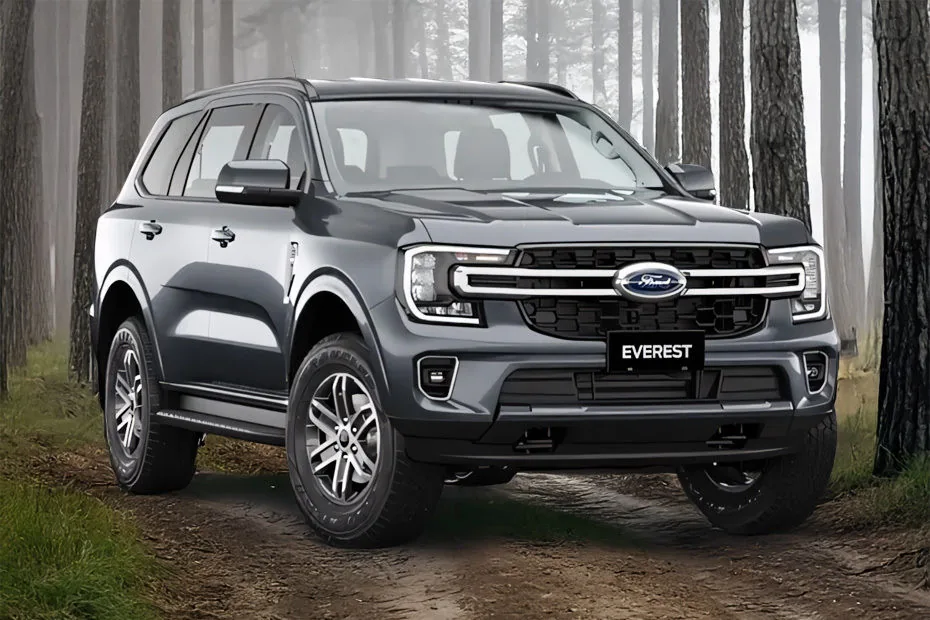
The 2026 Ford Everest comes in five different versions, with the XLS serving as the entry-level model and the XLS Diesel as the premium offering.
Read more

Ford Everest

Body Type

Van

Fuel Type

Diesel

Transmission

Automatic

Mileage

N/A

Ford Everest Key Specifications

Engine cc

1998

Max Torque

405Nm

No of Airbags

2

BootSpace

259 L (all rows up) / 898 L (third row folded) / 1,823 L (both rows folded)

Ground Clearance

227 mm

Fuel Tank Capacity

80 L

Seating Capacity

Yes

Drive Type

4WD

Latest Updates on Ford Everest

What's New on Ford Everest?

Introduction

  • The three‑row SUV segment in the UAE is one of the most competitive and emotionally charged buying decisions a family makes. You need seven seats, need to feel safe, and also want a capable car. Knowing that most brands offer compelling choices, it becomes hard to pick the right one. Toyota and Nissan, the Japanese brands, have emerged as the preferred choices due to their clear advantages. And somewhere between those two sat a gap that Ford has been quietly and confidently filling with the Everest.
  • The Everest in the UAE is available in multiple combinations and variants, with strong 4×4 capability as standard and a spacious cabin with great features. What makes the Everest worth considering in the midst of rivals is its ladder‑frame construction, true off‑road capability with up to 800 mm wading depth, a 3,500 kg towing capacity, and equipment that makes it an almost‑luxury SUV rather than just a body‑on‑frame family hauler. This is a serious car, and it certainly deserves a serious look from UAE families.
  • Interior Key Highlights Inside the Everest, the quality is quite a differentiator. On the XLS and XLS Diesel variants, there is cloth seating and harder interior plastics, which are durable and honest but do not feel premium. The XLT steps the experience up with a leather‑wrapped steering wheel, a leather gear shifter, and leather‑stitched consoles that make the cabin feel quite premium; if you compare with rivals, there is quite a lot to deliberate. The Limited goes further with an electrochromic rear‑view mirror, ambient lighting, and a dual‑panel sunroof that changes the interior vibe completely. What attracts your attention first is the 8‑inch LCD instrument cluster, which is standard across all variants, clear, and positioned perfectly for the driver. The cockpit has a 10‑inch touchscreen on the XLS and XLT that is responsive and runs Ford’s SYNC 4 v2 system, which handles Apple CarPlay and Android Auto cleanly. The Limited’s 12‑inch touchscreen with built‑in navigation adds screen real estate and navigation without requiring a phone. The glovebox cooler is standard on every single variant. Front Seat The front seats are an area where the Everest’s trim choices clearly separate the experience. The XLS and XLS Diesel have 8‑way manually adjustable driver’s and 4‑way manually adjustable passenger seats with cloth upholstery. The XLT and Limited upgrades both have front seats with 8‑way power adjustment and leather, and the difference in long‑drive comfort is significant. The driver’s seat on the power variants has enough adjustment range to accommodate a wide variety of body types without compromise. The leather‑wrapped steering wheel with audio, phone, and cruise‑control buttons is standard from the XLT upwards. On the XLS, the steering wheel controls are present but without leather wrapping. Electronic Parking Brake All variants of the Everest use a traditional handbrake rather than an electric parking brake, which certainly looks dated. However, Hill‑Start Assist is standard across the range, which means the car holds itself on slopes without rollback. The absence of auto‑hold means you are pressing the brake pedal yourself. Rear Seat This matters more to families than everything else, and most won’t be disappointed. The second row is a 60:40 split‑folding bench seat, standard across all variants. What you get is generous legroom for two adults, and three adults fit, though the middle position is narrower than the outboard seats. The second row on the Limited trim gets leather upholstery, which has become a minimum expectation at this price point. The third row is where this class of vehicle is always looked at carefully. The Everest’s third‑row seats are folding on the XLS and XLT, with manual operation. The Limited gets power‑folding third‑row seats. The third row is usable for children and fine for short journeys if adults wish to use it. AC Vents The Everest runs a manual single‑zone climate control on the front, with a fully independent rear‑row AC system featuring both overhead and floor‑level vents. That independent rear system, standard on all variants, means passengers in the second and third rows are not dependent on the front AC to eventually reach them. Storage Options The Everest’s storage reflects the practicality of its ladder frame design. The center console is deep and wide. The door pockets are big enough, and so is the glovebox, which is cooled and usable. There are cupholders present in the front and rear. The second‑ and third‑row passengers have access to dedicated storage provisions. Armrest The front center armrest is padded and wide, with a covered storage compartment below it. Its height and positioning suit most drivers without adjustment. The second‑row armrest folds down from the center seatback and includes cupholders. The third‑row passengers are without a dedicated armrest, which is consistent with the class and the available space. Charging Options The XLS and XLS Diesel variants have standard USB ports in the front row only, with no wireless charging. The XLT and Limited add a wireless charging pad, a windscreen‑mount USB port, and additional USB connectivity for rear passengers. Boot Space With all three rows occupied, the Everest offers 259 liters of boot space behind the third row; fold the third row, and the space expands to 898 liters. If you drop both rear rows, the load area opens to approximately 1,823 liters, which is van territory. The Limited’s cargo management system helps organize that space. The power‑folding third row makes the transition between seven‑seat and five‑seat configurations a one‑button operation rather than a manual effort.

Exterior

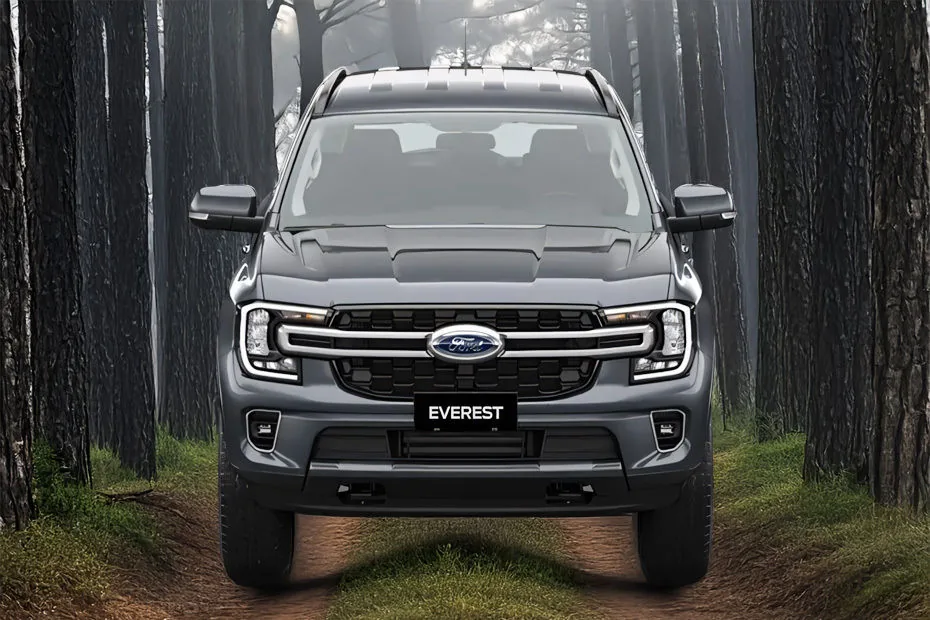
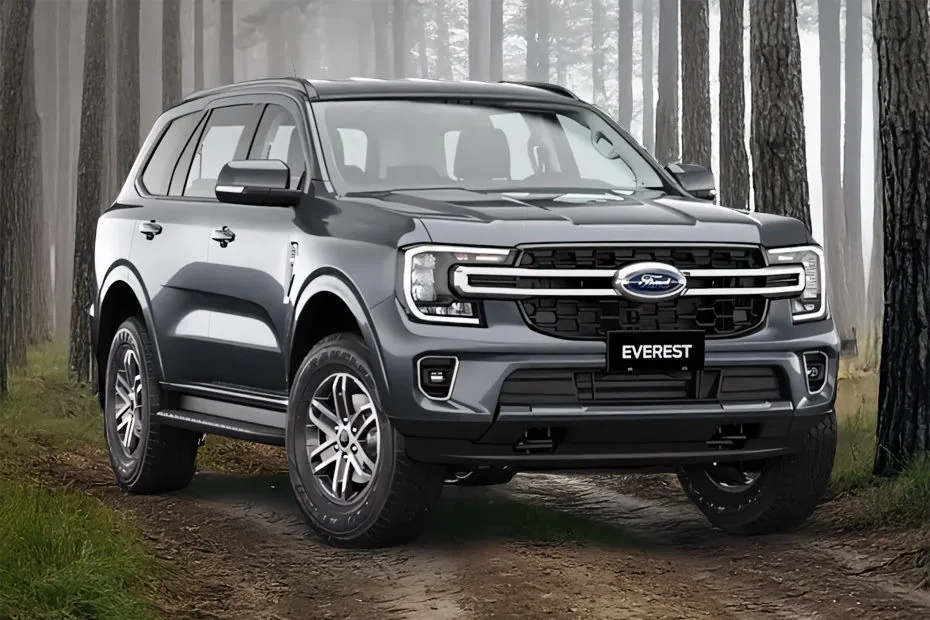
  • The front is quite distinctive and unmistakably Ford in the best way. The C‑clamp LED headlamps are the signature design element, wrapping around the upper corners of the grille with a recognizable spread that gives the car a wide, confident expression. The LED DRLs and LED fog lamps are standard across all variants, and the grille treatment changes by trim. At 4,914 mm long with a wheelbase of 2,900 mm, this is a big vehicle by any standard, and that is visible on the road.
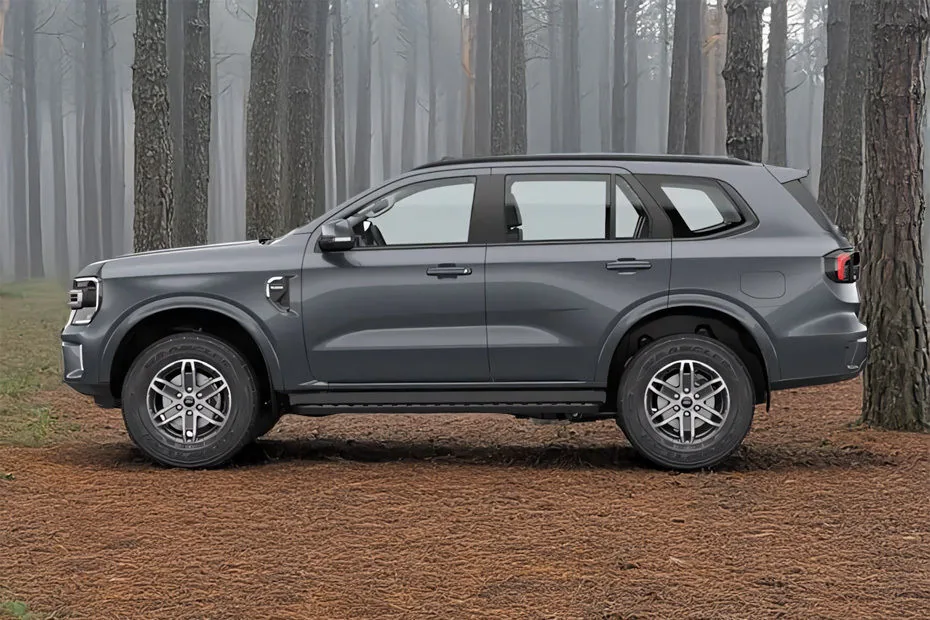
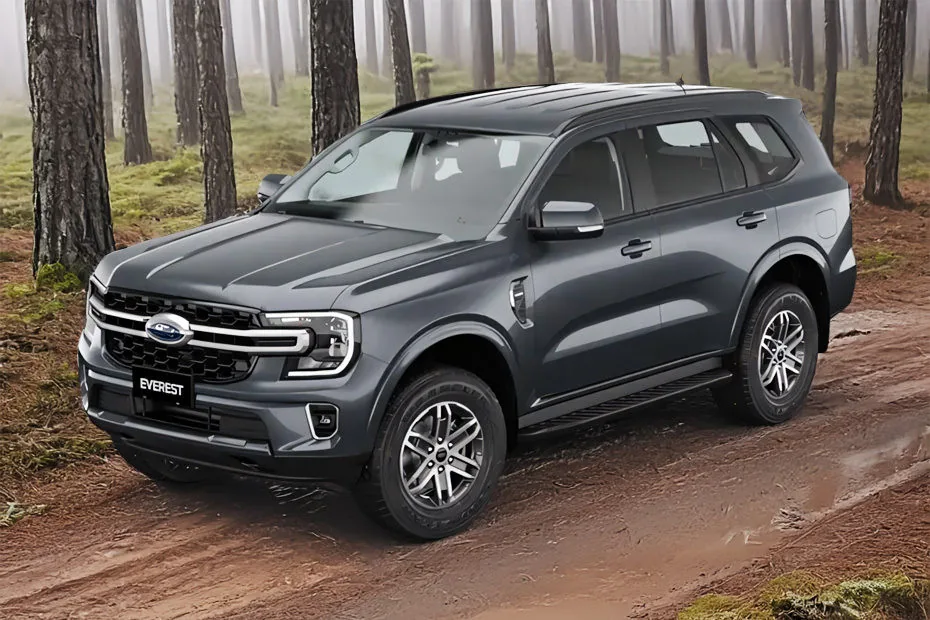
  • Just like the front, the side profile is upright and purposeful, as it should be on a ladder‑frame SUV. The roof rails are standard across all variants, and chrome trim appears on the Limited. The integrated sidesteps are standard too, a practical inclusion given the ride height. The power‑folding mirrors with puddle lamps on the Limited add a premium touch; the standard power‑folding mirrors on lower trims are functional and adequate. The underbody shields visible below the doors signal that this car has been engineered for more than just car park surfaces.
  • The XLS, XLS Diesel, and XLT trims ride on 18‑inch alloy wheels fitted with all‑terrain tires, a practical choice for a 4WD that buyers may actually use beyond tarmac. The Limited steps up to 21‑inch alloys with all‑season tires, which look striking but represent a different priority.
  • The rear of the Everest is clean and well‑proportioned to its size. The full LED taillamps carry the design language from the front. The manual liftgate on the XLS and XLT variants is functional, and the power liftgate on the Limited is the expected upgrade. Rear parking sensors are standard across the range. The underbody shields wrap around the rear, completing the package. The rear spoiler integrated into the roofline ties the design together without unnecessary decoration.
  • You get to choose from five colors in the UAE:
  • And two additional shades depending on market allocation.
  • Engine & Fuel Consumption Key Highlights Specification Petrol (2.3L EcoBoost I-4) Diesel (2.0L turbo diesel I-4) Power output 296 hp 170 hp Torque 420 Nm 405 Nm Transmission 10-speed SelectShift automatic 6-speed SelectShift automatic Drivetrain Permanent 4x4 (all variants) Permanent 4x4 (all variants) Fuel tank capacity 80 litres 80 litres Dimensions 4,914 mm L x 1,923 mm W x 1,842 mm H 4,914 mm L x 1,923 mm W x 1,842 mm H Wheelbase 2,900 mm 2,900 mm Ground clearance 227 mm 227 mm Wading depth 800 mm 800 mm Towing capacity 3,500 kg 3,500 kg Seating capacity Seven passengers Seven passengers Boot space 259 L (all rows up) / 898 L (third row folded) / 1,823 L (both rows folded) 259 L (all rows up) / 898 L (third row folded) / 1,823 L (both rows folded) City Performance Your city driving with the 2.3L EcoBoost petrol is quite simple and easy. The 296 hp and 420 Nm of torque are quite good for regular driving conditions, with a 10‑speed automatic that shifts smoothly and intelligently. In city driving around Dubai, on the flyovers, through the Al Quoz industrial district, and in the parking structures around Dubai Mall, the Everest is more manageable than its size suggests. The steering is well‑weighted, and the visibility is good from the raised driving position. Highway Performance Everest actually comes alive on the highway. With the 2.3L EcoBoost at 120 km/h on the E11, it is relaxed, quiet, and without any hurry. Overtaking on the Abu Dhabi to Dubai corridor with seven passengers on board should not be an issue, which may not be the case with some rivals. The diesel XLS is a different proposition altogether, offering superior fuel economy for buyers doing high‑mileage highway driving, with 405 Nm of diesel torque arriving early in the rev range. Its 6‑speed gearbox is less sophisticated than the petrol’s 10‑speed, but the diesel engine’s character suits long, consistent highway distances where gear changes are infrequent anyway. Ride Quality and Handling The Everest is ladder‑frame construction; that means the preference is for capability and durability over the floating ride of unibody crossovers. It absorbs even bad, rough road conditions with ease. The body roll in corners is present but well‑controlled given the car’s overall height and weight. For the most part, you won’t feel any issue with the steering being accurate rather than communicative. Most drivers are likely to find the balance exactly right for the kind of driving an Everest typically does: long, straight roads; occasional rough surfaces; and multi-story car park maneuvers.

Interior

  • Inside the Everest, the quality is quite a differentiator. On the XLS and XLS Diesel variants, there is cloth seating and harder interior plastics, which are durable and honest but do not feel premium. The XLT steps the experience up with a leather‑wrapped steering wheel, a leather gear shifter, and leather‑stitched consoles that make the cabin feel quite premium; if you compare with rivals, there is quite a lot to deliberate. The Limited goes further with an electrochromic rear‑view mirror, ambient lighting, and a dual‑panel sunroof that changes the interior vibe completely.
  • What attracts your attention first is the 8‑inch LCD instrument cluster, which is standard across all variants, clear, and positioned perfectly for the driver. The cockpit has a 10‑inch touchscreen on the XLS and XLT that is responsive and runs Ford’s SYNC 4 v2 system, which handles Apple CarPlay and Android Auto cleanly. The Limited’s 12‑inch touchscreen with built‑in navigation adds screen real estate and navigation without requiring a phone. The glovebox cooler is standard on every single variant.
  • The front seats are an area where the Everest’s trim choices clearly separate the experience. The XLS and XLS Diesel have 8‑way manually adjustable driver’s and 4‑way manually adjustable passenger seats with cloth upholstery. The XLT and Limited upgrades both have front seats with 8‑way power adjustment and leather, and the difference in long‑drive comfort is significant. The driver’s seat on the power variants has enough adjustment range to accommodate a wide variety of body types without compromise. The leather‑wrapped steering wheel with audio, phone, and cruise‑control buttons is standard from the XLT upwards. On the XLS, the steering wheel controls are present but without leather wrapping.
  • All variants of the Everest use a traditional handbrake rather than an electric parking brake, which certainly looks dated. However, Hill‑Start Assist is standard across the range, which means the car holds itself on slopes without rollback. The absence of auto‑hold means you are pressing the brake pedal yourself.
  • This matters more to families than everything else, and most won’t be disappointed. The second row is a 60:40 split‑folding bench seat, standard across all variants. What you get is generous legroom for two adults, and three adults fit, though the middle position is narrower than the outboard seats. The second row on the Limited trim gets leather upholstery, which has become a minimum expectation at this price point.
  • The third row is where this class of vehicle is always looked at carefully. The Everest’s third‑row seats are folding on the XLS and XLT, with manual operation. The Limited gets power‑folding third‑row seats. The third row is usable for children and fine for short journeys if adults wish to use it.
  • The Everest runs a manual single‑zone climate control on the front, with a fully independent rear‑row AC system featuring both overhead and floor‑level vents. That independent rear system, standard on all variants, means passengers in the second and third rows are not dependent on the front AC to eventually reach them.
  • The Everest’s storage reflects the practicality of its ladder frame design. The center console is deep and wide. The door pockets are big enough, and so is the glovebox, which is cooled and usable. There are cupholders present in the front and rear. The second‑ and third‑row passengers have access to dedicated storage provisions.
  • The front center armrest is padded and wide, with a covered storage compartment below it. Its height and positioning suit most drivers without adjustment. The second‑row armrest folds down from the center seatback and includes cupholders. The third‑row passengers are without a dedicated armrest, which is consistent with the class and the available space.
  • The XLS and XLS Diesel variants have standard USB ports in the front row only, with no wireless charging. The XLT and Limited add a wireless charging pad, a windscreen‑mount USB port, and additional USB connectivity for rear passengers.
  • With all three rows occupied, the Everest offers 259 liters of boot space behind the third row; fold the third row, and the space expands to 898 liters. If you drop both rear rows, the load area opens to approximately 1,823 liters, which is van territory. The Limited’s cargo management system helps organize that space. The power‑folding third row makes the transition between seven‑seat and five‑seat configurations a one‑button operation rather than a manual effort.
  • Safety Key Highlights The Everest carries 7 airbags across all variants, a meaningful number in a family SUV. The active safety picture, however, separates very clearly by trim: 7 SRS airbags, including curtain airbags ABS, ESC, and Roll Stability Control Reverse parking sensors Rearview camera Auto on/off headlamps Hill Launch Assist Off-road drive modes Front parking sensors Off-Road Screens with Rotary Terrain Management System Driver Alert System Collision Mitigation with Post Impact Braking Blind Spot Information System with Trailer Tow assist Reverse Brake Assist Zone Lighting Lane-keeping aid Adaptive Cruise Control with Stop and Go 360-degree camera Auto High Beam Pro-Trailer Backup Assist

Powertrain

  • 259 L (all rows up) / 898 L (third row folded) / 1,823 L (both rows folded)
  • Your city driving with the 2.3L EcoBoost petrol is quite simple and easy. The 296 hp and 420 Nm of torque are quite good for regular driving conditions, with a 10‑speed automatic that shifts smoothly and intelligently. In city driving around Dubai, on the flyovers, through the Al Quoz industrial district, and in the parking structures around Dubai Mall, the Everest is more manageable than its size suggests. The steering is well‑weighted, and the visibility is good from the raised driving position.
  • Everest actually comes alive on the highway. With the 2.3L EcoBoost at 120 km/h on the E11, it is relaxed, quiet, and without any hurry. Overtaking on the Abu Dhabi to Dubai corridor with seven passengers on board should not be an issue, which may not be the case with some rivals.
  • The diesel XLS is a different proposition altogether, offering superior fuel economy for buyers doing high‑mileage highway driving, with 405 Nm of diesel torque arriving early in the rev range. Its 6‑speed gearbox is less sophisticated than the petrol’s 10‑speed, but the diesel engine’s character suits long, consistent highway distances where gear changes are infrequent anyway.
  • The Everest is ladder‑frame construction; that means the preference is for capability and durability over the floating ride of unibody crossovers. It absorbs even bad, rough road conditions with ease. The body roll in corners is present but well‑controlled given the car’s overall height and weight. For the most part, you won’t feel any issue with the steering being accurate rather than communicative. Most drivers are likely to find the balance exactly right for the kind of driving an Everest typically does: long, straight roads; occasional rough surfaces; and multi-story car park maneuvers.
  • Features Key Highlights 10-inch SYNC 4 v2 touchscreen with Apple CarPlay and Android Auto 12-inch touchscreen with navigation 8-inch LCD instrument cluster 8-speaker audio system Bang and Olufsen 12-speaker premium audio Wireless charging 18-inch alloy wheels with all-terrain tyres 21-inch alloy wheels with all-season tyres Leather power seats front and rear Cloth manual seats Dual panel sunroof Power liftgate Glove box cooler Rain-sensing wipers Acoustic laminated windscreen Ambient lighting Cargo management system LED headlamps, taillamps, fog lamps, and DRLs Permanent 4x4 with locking differential
Read More

Ford Everest Specifications

  • Engine and Performance
  • Dimensions and Weight
  • Capacity
  • Suspension Brakes and Steering
  • Tyres and Wheels
No. of gears
10 Speed
Drive Train
4WD
Displacement (CC)
2298 cc
Power
296Hp
Torque
420Nm
Drivetrain
Permanent 4x4 (all variants)
Max Power
170Hp
Max Torque
405Nm
Wheelbase
2,900 mm
Ground Clearance
227 mm
Fuel tank Capacity
80 L
Seating Capacity
Seven passengers
Boot Space
259 L (all rows up) / 898 L (third row folded) / 1,823 L (both rows folded)
Steering Type
Electric
Front Brake Type
Ventilated Disc
Rear Brake Type
Disc
Tyre Type
Radial Tubeless

Ford Everest Features

  • Comfort and Convenience
  • Locks and Security
  • Seats and Upholstery
  • Safety and Security
  • Lights
  • Instrumentation
  • Entertainment
  • Advanced Features
Remote Engine Start
2.3L
Air Conditioner
Yes
Power Windows
Yes
Heater
Yes
Rear AC
Yes
Idle Start/Stop Button
Yes
Front AC
Yes
Automatic Headlamps
Yes
Power Outlets 12V
Yes
Keyless Entry
Yes
Cruise Control
Yes
Electric Sunroof
Yes
Rain Sensing Wipers
Yes
Third Row AC Zone
Yes
Central Locking
Yes
Engine Immobilizer
Yes
Driver Seat Adjustment
8 Ways
Passenger Airbags
Yes
Side Airbags
Yes
Driver Airbags
Yes
ABS
Yes
Electronic Brakeforce Distribution
Yes
Day & Night Rear View Mirror
Yes
Parking Sensors
Rear
Lane Assist
Yes
Curtain Airbag
Yes
Hill Assist
Yes
360 View Camera
Yes
No. of Airbags
2
Automatic High Beam Assist
Yes
Ambient Lighting
Yes
Fog Lamps
Yes
Low Fuel Warning
Yes
Clock
Yes
Instrument Cluster
8 Inch
Seat Belt Warning
Yes
Door Ajar Warning
Yes
USB & Auxiliary Input
Yes
Touch Screen
Yes
Bluetooth Connectivity
Yes
Speakers Front
Yes
Speakers Rear
Yes
Portable Charging Cable
Yes
Touch Screen Size
10 Inch
Apple Carplay
Yes
Android Auto
Yes
Numbers of Speakers
8
GPS Navigation
Yes
Audio System
Yes
emission_norm
Yes
Tacho Meter
Yes
Leather Seats
Yes
Leather Steering Wheel
Yes
Digital Odometer
Yes
Spare Wheel
Yes

Feedback

Your Feedback Matters!